The Certified, Local Advantage in Leander Tree Care
Expert tree care starts with training and trust. At Happy Tree Service of Austin, we’ve built our reputation on both. Our team is equipped with the credentials, tools, and local experience needed to address Leander’s evolving mix of native canopy and urban development.
ISA Certified Arborists and 30+ Years of Central Texas Experience
Every crew is led by an ISA certified arborist—someone trained by the International Society of Arboriculture to meet the industry’s highest standards. With over three decades of work across the Austin Metro, we’ve seen how local trees respond to everything from crown reduction and structural pruning to drought and disease. Our knowledge of species like live oak, cedar elm, and redbud allows us to work with—not against—each tree’s biology.
Texas Oak Wilt and Tree Risk Assessment Qualified Team
Leander’s trees are not immune to the dangers of oak wilt and high wind damage. That’s why our team includes Oak Wilt Qualified professionals and Tree Risk Assessment Qualified specialists. We can identify early signs of disease, evaluate trees for structural vulnerabilities, and create site-specific plans that reduce hazards without overcutting or rushing removals. For communities with shared green spaces or aging trees, this kind of risk evaluation is essential.
Science-Backed Tree Solutions, Not Just Labor Crews
We don’t guess. We diagnose. Happy Tree’s certified arborists use modern diagnostic tools, root zone evaluation, and soil health testing to build real treatment plans—especially for trees showing signs of stress, disease, or chlorosis. Every recommendation we make is grounded in arboricultural science, ANSI standards, and local insight—not guesswork or generic advice.
Responsive, Respectful, and Customer-Focused Service
Tree care isn’t just about what happens in the canopy—it’s about how you feel throughout the process. We show up on time, walk you through your options, and treat your property with care. Our crews clean up thoroughly, protect your existing landscaping, and prioritize communication from estimate to follow-up. That’s what makes us more than a vendor—we’re your long-term partner in tree care.
 Tree Trimming and Pruning That Supports Growth and Safety
In a growing city like Leander, trees often have to adapt to tight spacing, new construction, and sudden exposure to wind and sun. Proper tree trimming services ensure they stay balanced, strong, and safe in both private yards and common areas. Our team uses structural pruning techniques to promote long-term canopy health without risking shock or over-thinning.
Pruning to Direct Growth and Prevent Breakage
Our approach focuses on helping trees build strength from the inside out. By selectively removing weak, crowded, or overextended limbs, we encourage better structure and reduce the risk of branch failure. This is especially important for fast-growing species planted in new developments, where immature trees are vulnerable to breakage during storms.
Avoiding Over-Thinning That Leads to Canopy Stress
Too much trimming can be just as harmful as none at all. Techniques like lion-tailing or excessive interior clearing leave trees exposed, imbalanced, and unable to photosynthesize effectively. We avoid these mistakes by pruning conservatively, following industry guidelines that protect canopy density and natural form.
Improving Airflow and Sunlight for Understory Plants
Crown thinning isn’t just about aesthetics—it helps improve airflow through the canopy and allows more light to reach grass, shrubs, and bedding plants below. For homeowners dealing with thinning turf or overgrown beds, this can be a simple yet effective solution.
Safe Clearance From Roofs, Driveways, and Fences
Branches that rub against roofing, hang over walkways, or block visibility near roads present both safety risks and long-term maintenance issues. Our certified crews trim with an eye toward clearance and structure, reducing liability without sacrificing tree health.
Tree Removal and Emergency Services When It Can’t Be Avoided
There are times when even the most careful pruning and support systems can’t save a tree. Whether the cause is oak wilt, storm damage, or structural failure, tree removal services are sometimes the safest—and only—option. We handle this work with care, caution, and certified expertise.
When Tree Removal Is the Right Call
We start with a full inspection. Using risk assessment protocols, we look for root instability, trunk decay, codominant stems, and evidence of fungal or bacterial infection. If a tree poses a hazard to people, structures, or nearby utilities, we’ll explain why removal is necessary and help you plan the next steps.
Safe Dismantling in Tight or Sloped Areas
Many Leander homes sit on small lots, hillsides, or near utility lines. That’s why we use sectional dismantling techniques—cutting the tree in pieces and lowering each section safely with ropes and rigging. Our crews are trained for complex removals in both residential and commercial settings.
Rapid Response for Storm-Damaged Trees
When a storm splits a limb, uproots a tree, or sends branches crashing onto a roof, response time matters. Our emergency tree service crews respond quickly to stabilize damaged trees, remove immediate threats, and begin cleanup. We’re available after hours for urgent situations that affect safety.
Debris Cleanup and Safety Site Protocols
Tree removal isn’t just about cutting—it’s about leaving the space better than we found it. We protect adjacent landscaping, avoid ruts in the lawn, and clean up all debris thoroughly. We also inspect nearby trees for stress signs that might need monitoring after the event.
Stump Grinding for a Cleaner, Safer Landscape
Removing a tree is only half the job. If the stump is left behind, it can become a hazard, an eyesore, or a host for unwanted growth and pests. Our stump grinding service offers a clean, efficient solution that prepares your property for whatever comes next—whether that’s replanting, sodding, or simply restoring safe foot traffic.
Surface and Below-Ground Grinding Options
Depending on your future plans, we can grind the stump flush with the surface or well below grade to allow for new root systems or patio installation. Our equipment fits into most yards and minimizes turf disruption during the process.
Preventing Pests and Regrowth
A leftover stump can become a magnet for termites, ants, and fungus—especially in moist or shaded environments. Grinding removes the food source and stops the root system from sending up unwanted shoots, which can otherwise require years of follow-up trimming.
Post-Grind Mulch and Soil Reuse Guidance
We leave behind clean mulch that can be used for nearby beds or hauled away at your request. If you’re planning to plant a new tree in the same spot, we’ll offer guidance on soil amendment and spacing to give the replacement tree its best chance at success.
Tree Planting for Lasting Shade and Structure
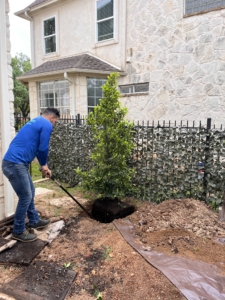
Tree planting is one of the most rewarding services we provide—but it’s also one of the most commonly mishandled. As a reliable tree planting company, we know that in Leander’s mixed terrain, success starts with choosing the right tree and planting it the right way.
Choosing the Right Tree for Your Site and Soil
Our ISA Certified Arborists help you select trees that are well-matched to your space, sunlight conditions, drainage profile, and long-term goals. Whether you’re looking for shade, privacy screening, ornamental color, or native resilience, we guide you toward species that will thrive in Leander’s environment. We often recommend proven performers like cedar elm, live oak, Mexican sycamore, or desert willow for their durability and low maintenance needs.
Proper Installation Depth and Root Flare Positioning
One of the most common reasons new trees fail is improper planting depth. We ensure each tree’s root flare is set slightly above grade, with a wide, shallow hole to support oxygen exchange and root expansion. Planting too deep suffocates roots and promotes rot, while planting too shallow risks instability. We get it right the first time.
Protecting Young Trees During Establishment
Newly planted trees need protection from environmental stress, mowers, and wildlife. We install mulch rings to retain moisture and reduce temperature fluctuation, and we can apply temporary stakes if needed to support upright growth. These first few years are critical, and our goal is to give each tree the stable foundation it needs to mature with strength.
Guidance on Watering and Structural Training
After installation, we offer customized watering plans based on species, soil conditions, and season. We also advise on when and how to begin structural pruning—light touch-ups that encourage a well-balanced canopy as the tree grows. This helps prevent future problems like crossing branches, codominant stems, or weak limb attachments.
Deep Root Fertilization and Air-Spading for Soil Recovery
 Beneath many Leander lawns lies a problem that can’t be fixed with surface care. Soil compaction, nutrient deficiencies, and poor drainage all contribute to tree stress, especially in newer developments where heavy equipment has altered the root zone. Our soil-focused services are designed to address these hidden challenges.
Soil Testing for Nutrient Deficiencies
We start with data. If a tree is showing yellowing leaves, stunted growth, or thinning canopy, we collect soil samples and evaluate nutrient levels, organic matter content, and pH. These insights help us pinpoint whether the issue is due to iron chlorosis, mineral depletion, or imbalanced pH—and then we can recommend the right course of action.
Deep Root Feeding for Improved Nutrient Access
Our deep root fertilization technique delivers slow-release nutrients directly into the root zone, bypassing compacted upper layers and encouraging stronger growth. This is ideal for trees struggling with mineral deficiencies, drought recovery, or slow leaf-out in spring. It’s also a great booster for trees planted in high-traffic or irrigated lawns.
Air-Spading to Break Up Compaction Without Root Damage
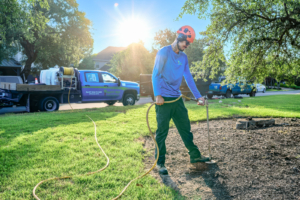
When soil is too compacted for water or air to penetrate, we use air-spading to loosen it. This tool uses compressed air to expose roots safely, improve drainage, and restore root health—all without damaging the tree. It’s especially useful for trees surrounded by driveways, sidewalks, or landscape beds with heavy foot traffic.
Supporting Stressed or Underperforming Trees
Every tree responds differently to its environment. Some need targeted nutrient support, while others need better oxygen flow or soil structure. Our arborists combine multiple tools—deep feeding, air-spading, and monitoring—to help struggling trees regain vigor and resilience over time.
Oak Wilt Prevention and Safe Seasonal Pruning in Leander
Leander’s live oaks and red oaks are a defining part of the landscape—but they’re also vulnerable to oak wilt, one of the deadliest tree diseases in Texas. This fast-moving fungal infection can spread rapidly across root systems and neighborhoods, making prevention and early action critical.
Early Detection and Symptom Recognition
Our Oak Wilt Qualified arborists are trained to spot subtle signs of infection, from veinal necrosis in leaves to dieback patterns and canopy thinning. Red oaks often die quickly and may serve as disease vectors, while live oaks typically decline in stages. Identifying these signs early can make the difference between containment and loss.
Enforcing Pruning Restrictions Between February and June
The oak wilt fungus is most active in the spring, when nitidulid beetles can carry spores from infected trees to fresh pruning wounds. To minimize risk, we strictly avoid pruning oaks between February and June unless absolutely necessary. When pruning must occur, we seal every cut to reduce vulnerability.
Certified Oak Wilt Treatment and Monitoring
Treatment options may include trenching to separate root systems, systemic fungicide injections, or the removal of infected trees. Our team develops treatment plans based on property layout, disease stage, and proximity to healthy trees. Ongoing monitoring is always part of the process.
Protecting Neighboring Trees Through Containment Zones
Because oak wilt spreads underground, protecting your trees often means protecting your neighbors’ trees too. We work with HOAs and adjacent property owners to create coordinated response strategies—especially in neighborhoods with dense oak populations or shared greenbelts.
Tree Care for Leander’s HOAs, Commercial Sites, and Shared Spaces
Caring for trees across multi-unit properties, common areas, and business campuses requires more than a chainsaw and a checklist. Our certified team offers scalable tree care plans that prioritize safety, visual impact, and long-term canopy health—without disrupting day-to-day operations.
Routine Trimming and Risk Evaluations for Common Areas
Overgrown branches, deadwood, and uneven canopies can pose a safety hazard or reduce curb appeal. We provide seasonal trimming and formal risk assessments to ensure trees remain healthy, balanced, and hazard-free throughout HOA entrances, parks, and public pathways.
Cabling and Bracing for Safety in Public Zones
Not all at-risk trees need to be removed. If a tree shows structural weaknesses but still offers aesthetic or shade value, we may recommend cabling and bracing to reinforce vulnerable limbs. This allows you to retain important trees while reducing liability in shared spaces.
Emergency Response and Documentation for Property Managers
After storms or high winds, we offer emergency response services that include debris clearing, hazard mitigation, and follow-up reports. We document all work performed and offer recommendations for future monitoring or maintenance—keeping managers fully informed.
Clear Estimates and Ongoing Support for Multi-Unit Landscapes
We understand the budgeting and planning challenges that come with managing larger properties. That’s why we provide written estimates, long-term service plans, and reliable scheduling. Whether you manage a small townhome community or a multi-acre business park, we build our services around your needs.
Schedule Trusted Tree Services in Leander Today
When it comes to preserving trees in Leander, experience matters—but so does partnership. At Happy Tree Service of Austin, we combine expert training, certified processes, and local insight to help you care for your trees with confidence.
Whether you’re looking for seasonal pruning, emergency removal, or a full-scale health plan, our ISA Certified Arborists are ready to help. Call us today to schedule a free on-site consultation anywhere in Leander or the surrounding area. Let us show you what proactive, science-backed tree care really looks like.