The Tree Problems We See Most in Central Texas
Austin trees fail for a short list of predictable reasons: oak wilt, hypoxylon canker, drought and heat stress on thin limestone soils, and storm damage to limbs that were never pruned correctly.
Oak Wilt
Oak wilt is a fungal disease that spreads through connected root systems underground and by sap beetles landing on fresh pruning wounds. Live oaks and red oaks are hit hardest. On a live oak the first sign is usually yellowing along the leaf veins, with the leaf dropping while the veins stay dark. A red oak moves faster and can lose its entire crown in a single season.
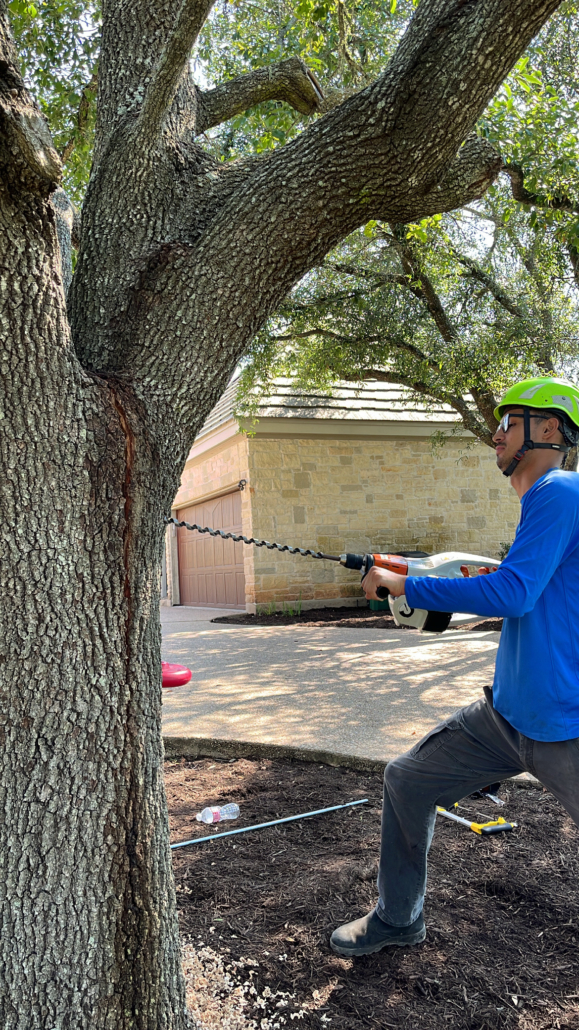
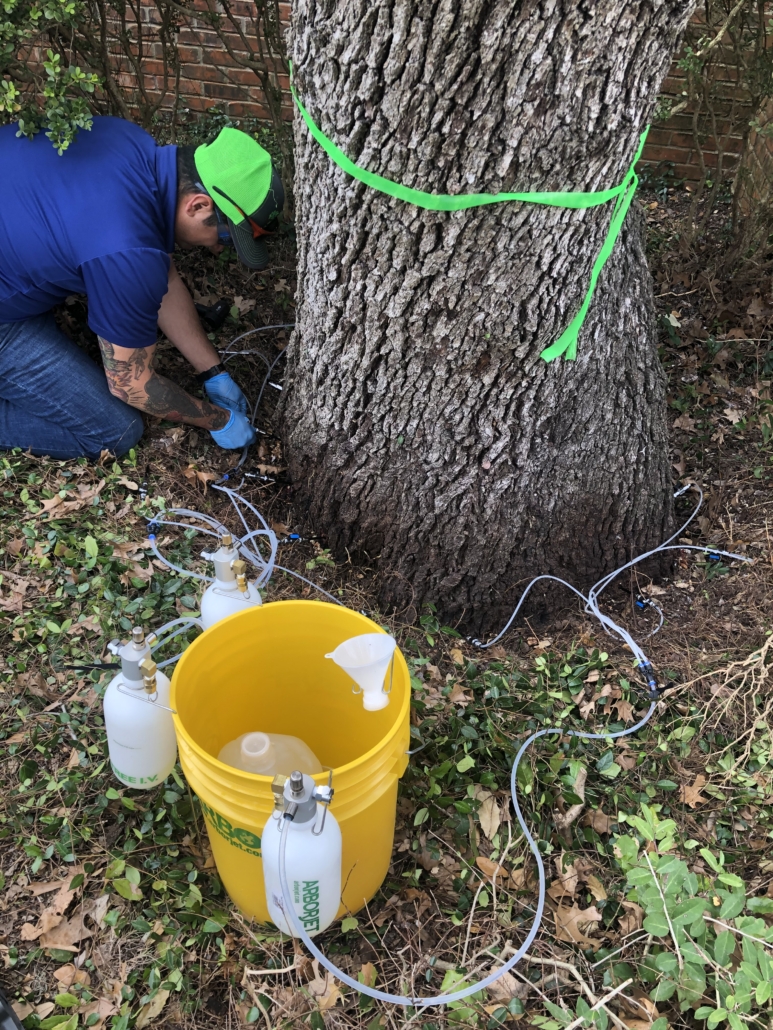
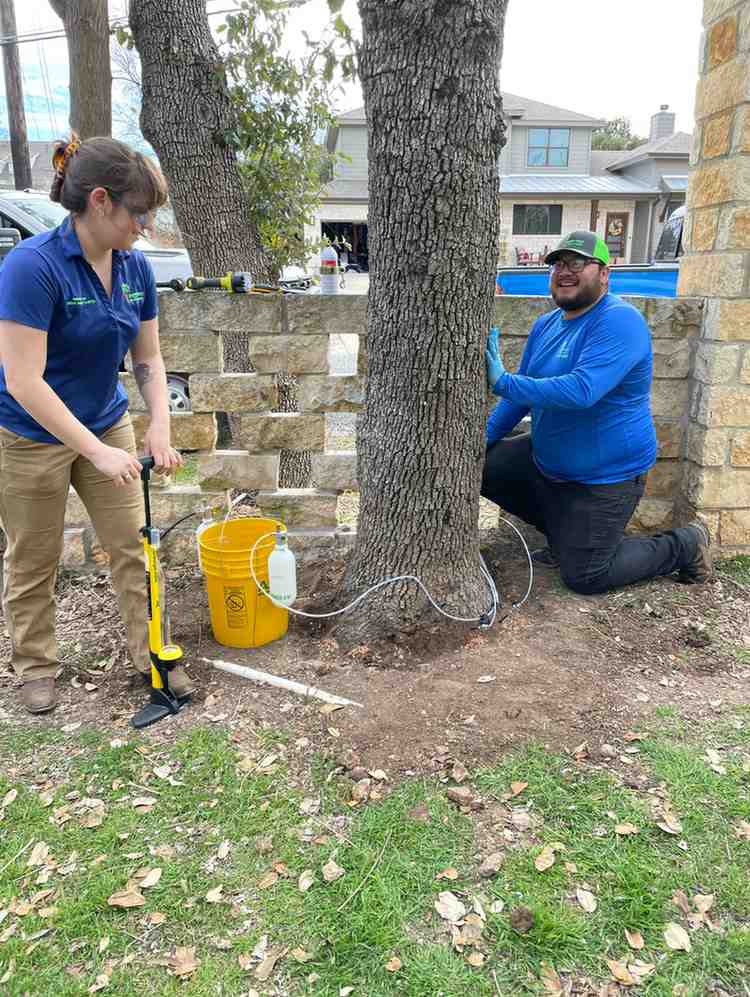
Because live oaks share grafted roots with their neighbours, oak wilt travels from tree to tree across a yard and on down a street. We stop it by injecting fungicide into the healthy trees worth protecting, trenching to sever the root grafts feeding the infection, and removing the trees that are already lost. Evan holds the Texas Oak Wilt Qualification, TOWQ-436, which covers all three.
The riskiest months to prune an oak in Central Texas are February through June, when the beetles are active and the fungus is producing spores.
Paint every pruning cut on an oak, in every season, within minutes of making it.
Read more about oak wilt treatment in Austin.
Hypoxylon Canker and Drought Stress
Hypoxylon canker is a fungus that sits quietly in healthy oaks and only turns destructive once the tree has already been weakened by drought. The first sign is bark sloughing off in sheets to reveal a silver or tan crust underneath, and by the time that shows the wood below it is usually dead. Trees on the thin limestone soils west of Austin are the most exposed, because their roots have very little depth to hold water through a hot summer. Deep watering through the summer is the best defence, and our tree healthcare services in Austin cover diagnosis and soil work when a tree is already under stress.
Ball Moss and Mistletoe
Ball moss is an air plant that clusters on shaded interior branches, and mistletoe is a parasite that taps into the branch itself and draws water out of it. Neither one kills a healthy tree on its own, but both point to a canopy that has grown too dense or a tree already under stress, and we take both out as part of routine trimming.
Austin Tree Ordinance and Permits
Yes, some tree removals in Austin require a permit from the City.
The City Arborist Program regulates trees on private property by trunk size, and the rules apply whether the tree is healthy, dead or simply in the way of a build. Getting it wrong is expensive, so it is worth two minutes with a tape measure before you plan any work.
Which Trees Are Protected in Austin
Any tree in Austin with a trunk 19 inches or more across is a protected tree, and that applies to every species. Diameter is measured at 4.5 feet above the ground, which the City calls diameter at breast height. The easiest way to check is to run a tape around the trunk at chest height and divide that number by 3.14, so a trunk measuring roughly 60 inches around sits right at the 19-inch threshold.
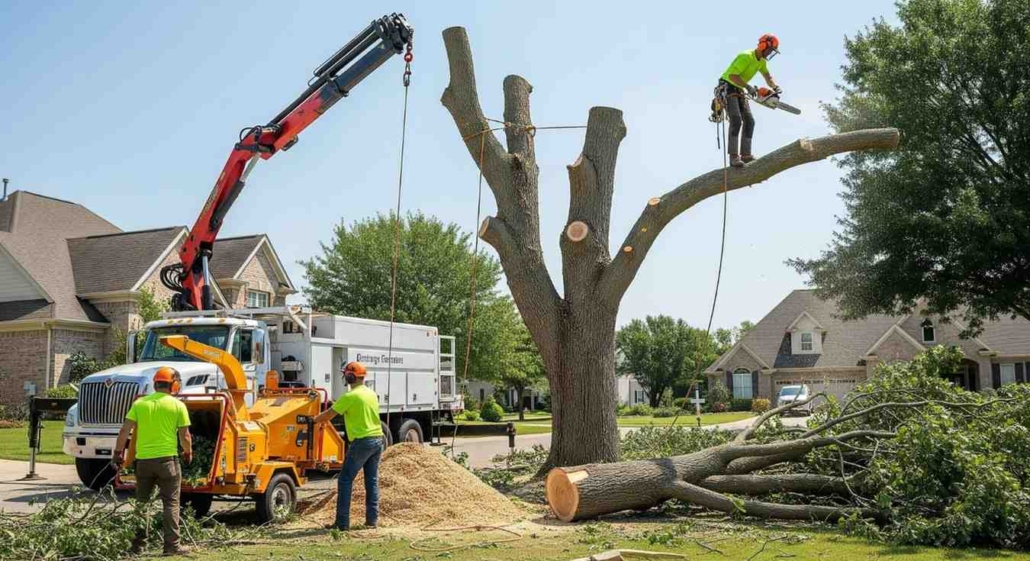
You need a permit to remove a protected tree, and you also need one to take off more than 25 percent of its canopy. When the work is not part of a building project, the form is a Tree Ordinance Review Application, filed through the City’s permitting portal. We handle that application for our clients as part of the job.
Two things surprise people. A tree that is dead, diseased or an imminent hazard is still regulated, although there is a separate and faster permit path for it. And the ordinance applies inside Austin’s full and limited purpose jurisdictions but not in the extraterritorial jurisdiction, so an address just outside the city limits may not be covered at all.
What a Heritage Tree Is
A heritage tree is a tree 24 inches or more in diameter that also belongs to one of ten species the City has singled out for the strongest protection. Size on its own is not enough. A 30-inch hackberry is a protected tree rather than a heritage tree, because hackberry is not on the list.
The ten heritage species are:
- All oaks
- Pecan
- Bald cypress
- Cedar elm
- American elm
- Texas ash
- Texas madrone
- Bigtooth maple
- Arizona walnut
- Eastern black walnut
Removing a heritage tree is prohibited rather than permitted. The only route is a variance, which has to be justified and is granted rarely, and once a heritage tree reaches 30 inches that variance goes through a public process. In practice, most of the mature live oaks in Tarrytown, Hyde Park, Rosedale and the older streets of West Austin are heritage trees, which is why we measure before we quote.
If you are not sure whether your tree is protected, that is a normal question and a five-minute answer. Send us a photo and we will tell you where you stand before you spend anything.
What to Expect When You Hire Happy Tree as your Certified Arborist in Austin
Every job runs the same four steps, from the first call to the last branch off your lawn.
- Free estimate. A certified arborist walks the property, looks at the trees, and explains what he sees and why.
- Written quote. Itemised, with the reasoning behind each recommendation, so you know what you are paying for before anyone starts.
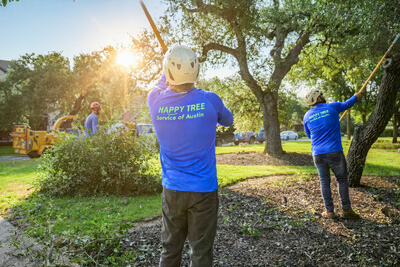
- Scheduled work. Crews arrive when we say, protect the property, and follow the plan you approved.
- Full cleanup. Debris hauled away, wood chips left for your garden if you want them, and a walk-through before we go.
If we think a tree can be saved, we will tell you so, even when removal would be the bigger invoice.
Tree Services Near You and Across Austin Metro Area
We serve Austin and the surrounding Central Texas communities, from Tarrytown and Westlake Hills out to Round Rock, Georgetown, Dripping Springs and Bastrop.