Why Trust Happy Tree Service for Tree Pruning in Bee Cave
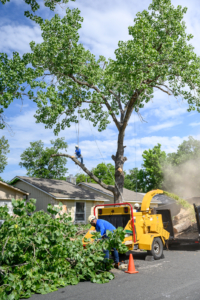 A single bad pruning cut can cause irreversible damage to your trees. A flush cut invites decay into your trunk. A topping cut destroys your tree’s natural structure and triggers weak, fast-growing water sprouts. A pruning wound on one of your live oaks during the wrong season can attract the nitidulid beetles that carry oak wilt. In Bee Cave, these mistakes happen on local properties every year, usually after a homeowner hires an unqualified crew offering a low bid.
Credentials matter for pruning specifically. Our lead ISA Certified Arborist is Evan Peter (TX-4602A). He’s TRAQ certified, Texas Oak Wilt Qualified (#TOWQ-436), and a licensed pesticide applicator (#0967351). If you’re looking for a dependable tree service Bee Cave homeowners can trust for careful pruning and long-term tree health, those credentials make a meaningful difference. We follow ANSI A300 pruning standards on every job, and we back that up with over 30 years of combined Hill Country experience and more than 300 five-star reviews from Austin-area homeowners.
What Qualifications Should a Tree Pruning Company in Bee Cave Have?
Before you hire anyone to prune your trees in Bee Cave, verify these qualifications:
- ISA Certified Arborist: means the person evaluating your trees has passed the industry’s professional certification and keeps their knowledge current through continuing education.
- TRAQ (Tree Risk Assessment Qualification): means your arborist is trained to evaluate structural risk, failure potential, and site-specific hazards on your property before making any cuts.
- Proof of insurance: general liability and workers’ compensation coverage protects you from financial exposure if something goes wrong during the job.
- Texas Oak Wilt Qualification: confirms the crew working on your property understands oak wilt biology, transmission vectors, and the seasonal restrictions that apply in Bee Cave.
- ANSI A300 knowledge: the national standard that defines proper cut placement, maximum removal percentages, and species-appropriate techniques for your trees.
- Bee Cave ordinance familiarity: the City of Bee Cave’s tree preservation code (Article 26.03) protects significant trees, and violations from improper pruning can result in fines.
Without these qualifications, you could end up spreading oak wilt, creating new structural failure points, or facing fines under Bee Cave’s tree preservation code. Every job we take starts with a free on-site arborist assessment.
When to Prune Trees in Bee Cave: Seasonal Timing and Oak Wilt Prevention
When you prune matters as much as how you prune. In Bee Cave, the city restricts oak pruning from February 1 through June 30 to reduce the spread of oak wilt, and the safe window for oak work runs from July through January.
Can You Prune Oak Trees in Bee Cave During Spring?
No. If you have oaks on your Bee Cave property, pruning is prohibited between February 1 and June 30, in alignment with guidance from the Texas Oak Wilt Information Partnership and the Texas A&M Forest Service. Violating this restriction can result in fines under the city’s tree preservation code. If a storm damages one of your oaks during the restricted window, emergency pruning is permitted, but you must seal all wounds immediately and sterilize all cutting tools with a 10% bleach solution or denatured alcohol between every tree.
The restriction exists because nitidulid beetles, the primary carriers of the oak wilt fungus (Bretziella fagacearum), are most active during the warmer months and are drawn to fresh pruning wounds. For you, that means even a small cut on one of your oaks between February and June carries real risk.
The Texas A&M AgriLife Extension also recommends adjusting pruning timing based on species type and growth cycle. Here’s how that breaks down for the most common trees on Bee Cave properties:
| Tree Species |
Best Pruning Window |
Bee Cave Notes |
| Live oak |
July through January |
Follow Bee Cave’s oak wilt restriction. Seal all wounds immediately, even during the safe season. |
| Texas red oak |
July through January |
Highly susceptible to oak wilt. Avoid any pruning during the restricted period. |
| Cedar elm |
Late fall through winter (dormant season) |
Your cedar elms respond well to crown thinning during dormancy. |
| Pecan |
Late winter (January through early March) |
Best pruned before bud break to improve airflow and nut production. |
| Fruit trees |
Late winter, before bloom |
Thinning and shaping cuts improve sunlight and air circulation through your canopy. |
| Ornamentals |
After flowering, or late winter for non-blooming types |
Timing depends on bloom cycle. Your spring bloomers get pruned after flowers drop; summer bloomers in late winter. |
If a storm damages one of your trees outside of its ideal window, emergency pruning is still the right call. The priority is removing the immediate hazard, stabilizing the remaining structure, and protecting the wound site.
Signs Your Trees in Bee Cave Need Pruning
Most tree failures show warning signs well in advance. Catching them early gives you the option to prune and preserve rather than wait and pay for a full removal.
Watch for these indicators on your Bee Cave property:
- Dead or hanging branches: any branch with no live foliage, peeling bark, or a visible crack at the attachment point is a fall risk, and you should have it removed before it drops on its own.
- Overcrowded canopy: dense interior growth in your trees restricts airflow, traps moisture, and creates conditions that encourage fungal disease and pest activity.
- Branches over rooflines, walkways, or driveways: limbs that encroach on your structures or pedestrian areas create liability exposure and property damage risk with every wind event.
- Lopsided or storm-damaged growth: unbalanced canopies put uneven stress on the trunk and root system, increasing the chance of whole-tree failure on Bee Cave’s sloped lots.
- Visible disease or pest symptoms: leaf discoloration, premature leaf drop, fungal growth on bark, bore holes, or oozing sap all signal that something is compromising your tree’s health.
- Too much shade on your lawn and plantings: when your canopy blocks sunlight from reaching the ground, it affects your turf, garden beds, and any smaller plantings you’re trying to maintain.
Early pruning almost always costs less than the emergency work or full removal you’ll need if the problem progresses.
How Do I Know if My Tree Needs Pruning or Removal?
Your arborist makes that call by evaluating the trunk integrity, root stability, canopy structure, and the extent of any disease or decay. If the tree has a sound trunk, a viable canopy, and enough healthy tissue to recover, pruning is almost always the better path. Removal becomes the recommendation when structural compromise has gone too far, when disease has spread beyond recovery, or when the tree poses a safety threat that pruning alone can’t resolve. The right approach also depends on species, because your live oaks and your cedar elms respond very differently to the same structural challenges.
Tree Species-Specific Pruning for Bee Cave Properties
Your arborist’s approach changes based on species, and in Bee Cave, these are the trees we work with most on local properties.
- Live oaks are the backbone of most Bee Cave landscapes. Your live oaks hold their leaves through winter, so we watch canopy weight year-round. We focus on structural balance, deadwood removal, and crown thinning to reduce wind load, all during the July through January safe window and with immediate wound sealing as part of our oak wilt prevention
- Texas red oaks are deciduous, fast-growing, and highly susceptible to oak wilt. If you have red oaks, pruning during the restricted season is especially risky because red oaks produce the fungal mats that attract nitidulid beetles. We handle your red oaks during the dormant season, focusing on crossing branches and canopy density.
- Cedar elms are one of the most common urban trees in Bee Cave. They grow quickly and often develop dense, tangled canopy structures that benefit from regular thinning. Late fall through winter is ideal for major work. Mistletoe is common in Bee Cave cedar elms and weakens the host tree over time, so we check for it on every visit.
- Pecans thrive in Bee Cave’s deeper soil pockets and along creek bottoms. We prune your pecans in late winter, before bud break, removing deadwood and water sprouts and raising the lower canopy to let light and air reach the trunk.
- Fruit trees need annual pruning to stay productive. We open the canopy center for sunlight and air circulation while keeping your tree at a manageable size. Late winter, before bloom, is the standard timing for most varieties grown in Central Texas.
- Ornamental trees and shrubs follow species-specific timing based on their bloom cycle. We identify the species first and match the timing to the plant’s biology. Your spring-blooming ornamentals get pruned after flowering. Summer-blooming types do better with late-winter pruning.
How Professional Pruning Protects Your Property and Tree Investment in Bee Cave
A mature tree on your Bee Cave property is a structural asset that affects your home’s value, your energy costs, and your liability if a tree causes storm damage. Professional pruning protects that asset by reducing the weight and wind resistance that cause branch failure, removing hazards before they become emergencies, and maintaining the kind of healthy canopy structure that keeps your trees standing for decades.
Over the long term, professional pruning also extends the productive life of your trees. Clean, properly placed cuts heal well and maintain your tree’s natural defense systems. In Bee Cave’s Hill Country conditions, where wind exposure is constant and shallow soils limit root anchoring, the quality of those cuts compounds season after season.
How Often Should Trees Be Pruned in Bee Cave?
The right pruning cycle depends on your tree’s age, species, location on your property, and proximity to structures or utilities:
- Mature trees: your established trees typically benefit from professional pruning every two to three years to maintain structure, remove deadwood, and manage canopy size.
- Young trees: annual structural pruning during the first 5 to 10 years establishes strong branch architecture and prevents costly corrective work later.
- Oaks: your oaks should be evaluated annually but pruned only during the July through January safe season, with frequency based on canopy density and site risk.
- Trees near structures or power lines: may need clearance pruning annually or as growth dictates, especially after heavy spring growth seasons.
We also provide written post-pruning reports and multi-year pruning plans for homeowners who want to manage their trees proactively. These plans map out recommended pruning intervals for every significant tree on your property. They track health changes over time and help you budget for ongoing care rather than reacting to emergencies. For HOA boards and property managers, they serve as documentation of responsible tree stewardship.
Schedule Expert Tree Pruning in Bee Cave
The right pruning approach depends on your trees, your property, and what you want to accomplish. That’s why every Happy Tree Service engagement starts with a free on-site arborist assessment. Our ISA Certified Arborists follow ANSI A300 pruning standards, schedule all oak work during the safe season, and bring over 30 years of Hill Country experience to every job in Bee Cave. Whether you need a single deadwood removal or a full-property pruning plan, we’ll build an approach that fits.
Call 512-212-0010 or schedule your free estimate through our website.
Frequently Asked Questions About Tree Pruning in Bee Cave
What is the best time of year to prune trees in Bee Cave, TX?
It depends on the species. Your oaks should only be pruned between July and January to prevent oak wilt, while most deciduous trees do best during dormancy in late fall or winter. Deadwood and hazard limbs can come off year-round.
How much does tree pruning cost in Bee Cave, Texas?
Your cost depends on the size of your tree, the type of pruning required, accessibility, and the number of trees on your property. Call 512-212-0010 to schedule your free estimate.
What is the difference between tree pruning and tree trimming?
Trimming shapes your tree’s outer growth for appearance. Pruning is a targeted, biology-driven process where your arborist removes specific branches to improve structure, health, safety, and airflow according to ANSI A300 standards.
Do I need a permit to prune trees in Bee Cave?
Routine pruning on your own property typically does not require a permit, but Bee Cave’s tree preservation code (Article 26.03) protects significant trees. The city can fine you for removing or substantially altering a protected tree without approval, so check with a certified arborist if you’re unsure.
How do I find a certified arborist in Bee Cave, TX?
Look for a company that employs ISA Certified Arborists, holds TRAQ certification, carries full insurance, and understands Bee Cave’s local ordinances and oak wilt restrictions. You can verify ISA certification through the International Society of Arboriculture’s online directory.
What happens if you prune oak trees at the wrong time in Texas?
Pruning your oaks during the February through June risk window exposes fresh wounds to nitidulid beetles, which carry the Bretziella fagacearum fungus responsible for oak wilt. Once infected, your oak can decline within weeks to months, and the disease can spread to neighboring trees through connected root systems.