Why Bastrop Trusts Happy Tree for Certified Tree Care
Tree work in Bastrop demands a team that understands the terrain, the species, and the science behind every service. That’s why we’ve built our team around qualifications, local familiarity, and a reputation for doing things the right way.
ISA Certified Arborists With 30+ Years of Regional Experience
Our work is led by ISA Certified Arborists with decades of experience in the Central Texas region. We understand how native oak, pine, and hardwood species respond to Bastrop’s unique combination of sandy soil, seasonal flooding, and drought stress. That long-term perspective helps us make informed decisions about which trees can be saved, which need structural support, and when action is needed to prevent hazards before they develop.
Oak Wilt and Tree Risk Assessment Qualified
Oak wilt is present across Bastrop County, especially in communities west of the Colorado River. Our team includes Oak Wilt Qualified professionals who can identify the early symptoms and stop the spread through certified treatment protocols. We’re also Tree Risk Assessment Qualified, which means we’re trained to detect signs of internal decay, root instability, and other hidden problems that can compromise safety near homes, barns, or roads.
Trusted by Rural Landowners, New Homeowners, and HOAs
Whether you manage a ranch property with a long tree line or you’ve just moved into a new home in a growing subdivision, we offer tree care tailored to your goals. HOAs trust us to maintain common area trees safely and efficiently, while rural property owners count on us for long-range planning, emergency service, and legacy tree preservation.
Science-Led Evaluations, Not Guesswork or Overcutting
We approach tree care the same way we approach plant health: through careful diagnosis, not shortcuts. Our services are guided by arboricultural standards, root zone assessments, and—when needed—soil or tissue testing. This ensures we’re not removing more than necessary and that your trees are treated with long-term resilience in mind.
Clear Estimates and No-Pressure Recommendations
We believe that professional advice should come without a sales pitch. Our estimates are clear, detailed, and designed to give you real options—not pressure. If your trees are healthy, we’ll tell you. If they’re struggling, we’ll explain why and offer a plan based on science, safety, and what makes sense for your property.
Tree Trimming and Pruning That Protects Trees and Property
Our professional tree trimming services are more than just cutting back limbs—they’re about guiding healthy growth, reducing risk, and supporting long-term strength. In Bastrop, where strong winds and summer droughts are common, smart pruning can prevent major damage and promote healthier trees in both older neighborhoods and newly developed areas.
Structural Pruning for Wind Resistance and Balance
Unbalanced or top-heavy trees are more likely to lose limbs or lean dangerously during storms. We use structural pruning to remove overextended branches, reduce weak limb attachments, and shape younger trees for better long-term form. This helps the canopy withstand wind stress and minimizes the need for emergency trimming down the line.
Canopy Thinning for Airflow and Sunlight
Thick, dense canopies can trap heat, block airflow, and encourage pest problems like fungal infections or ball moss. Our canopy thinning service removes interior branches selectively, allowing more light to penetrate the lower canopy and improving overall air circulation. This is especially helpful for trees near homes or over gardens where air stagnation can lead to additional plant health issues.
Safe Clearance for Homes, Roads, and Trails
Branches that grow too close to roofing, fencing, or driveways become safety risks over time. We create clearance zones that protect structures while preserving the natural form of the tree. Our crews work around buildings, utility lines, and trails with a focus on both precision and safety—minimizing disruption while improving visibility and access.
Avoiding Over-Pruning and “Flush Cuts” That Harm Trees
Not all pruning is helpful. We avoid outdated techniques like flush cuts, topping, or lion-tailing that damage a tree’s ability to heal or weaken its structural integrity. Every cut we make is done with proper spacing, tool hygiene, and a clear understanding of tree biology.
Tree Removal and Emergency Services With Safety as the Priority
When a tree is no longer stable or poses a threat to nearby structures, dangerous tree removal may be necessary to keep your property safe. Our approach is centered on safety, planning, and full property protection—especially in areas with limited access or sensitive surroundings.
When a Tree Needs to Be Removed
We assess every tree for signs of internal rot, root flare decay, canopy failure, or previous storm damage. If our evaluation shows that a tree is no longer viable—or that it poses a high risk to your home, driveway, or structures—we explain your options clearly and recommend next steps. If the tree can be saved with pruning or bracing, we’ll tell you that too.
Sectional Rigging and Lowering Near Structures
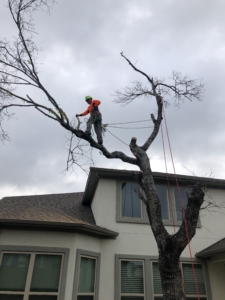
In many Bastrop neighborhoods and ranch homes, trees grow near fencing, barns, power lines, or septic systems. We use sectional rigging to lower limbs safely without damage to surrounding areas. Our team plans every cut in advance and controls the worksite for maximum efficiency and safety.
Emergency Response After Lightning or Wind Damage
If a tree splits, drops a major limb, or comes down entirely during a storm, we offer emergency tree service across Bastrop County. Our first priority is to secure the scene, remove any immediate hazards, and assess nearby trees for additional risk. We’re not a storm-chasing crew—we’re a certified team that responds quickly and works with care.
Protecting Nearby Trees, Turf, and Hardscaping
Tree removal doesn’t have to mean tearing up your lawn or damaging irrigation. We use ground protection, careful equipment access, and detailed cleanup to minimize impact. We also offer follow-up assessments for neighboring trees that may have been exposed to wind stress or root shock after a major removal.
Stump Grinding for Clean, Usable Outdoor Spaces
Removing a tree is only half the job. Leaving a stump behind can prevent you from replanting, mowing safely, or using the space effectively. Our stump grinding service helps you fully reclaim the area—whether it’s in a backyard, a pasture, or a public-facing commercial site.
Grinding to Support Lawn Restoration or Replanting
We grind stumps down well below the surface so you can lay sod, install beds, or replant a tree in the same spot. This process helps break up the remaining root plate and leaves the area flat and ready for reuse. We can also advise on soil amendments or spacing if you plan to plant again.
Eliminating Trip Hazards and Insect Colonies
Stumps are magnets for termites, carpenter ants, and wood-decaying fungi. They also present tripping hazards—especially in high-traffic areas like HOA greenbelts or school properties. Grinding removes that risk and creates a safer, cleaner outdoor environment.
Available for Residential, Ranch, and Commercial Projects
Whether you’re removing a pine on a 10-acre property or finishing off a tree removal in a tight urban lot, our equipment can handle the space. We work with homeowners, commercial developers, and rural landowners to ensure every project is finished cleanly, safely, and completely.
Tree Planting That Thrives in Bastrop Soil and Climate
Our tree planting & installation service in Bastrop isn’t just about filling a space—it’s about restoring canopy, encouraging biodiversity, and adding long-term value to your landscape. In areas affected by wildfire, erosion, or poor soil health, selecting the right tree and planting it properly can make all the difference.
Species Selection for Shade, Screening, or Wildlife Habitat
We help you choose trees that serve a purpose—whether that’s creating shade, buffering noise or wind, or supporting local wildlife. Native species like live oak, red bay, and sassafras are excellent options for larger lots, while smaller trees like desert willow or Mexican plum offer beauty and pollinator support without crowding the space. Every selection is tailored to your site and your goals.
Proper Planting for Sandy or Loamy Soil
Bastrop’s soil varies dramatically between riverfront properties and upland areas. We test drainage and root zone depth to ensure that each tree is planted with the conditions in mind. In sandy soils, we focus on moisture retention and root flare exposure. In loamy or compacted zones, we prepare the site to avoid pooling or instability.
Watering Support and Early Structural Care
The first 12 to 18 months after planting are critical. We provide watering schedules and maintenance guidance to support early root establishment, especially during hot, dry periods. We also perform light structural pruning after the first growing season to help young trees grow strong and balanced from the start.
Planning for Long-Term Growth and Canopy Needs
We don’t just plant for today—we plan for the next 10 to 50 years. That includes evaluating proximity to buildings, overhead lines, driveways, and neighboring trees. We also account for eventual canopy spread, root expansion, and maintenance requirements to make sure the tree fits both your landscape and your lifestyle over time.
Deep Root Fertilization and Air-Spading for Stressed Trees
Some of the biggest threats to tree health lie below the surface. In Bastrop, where trees often grow in sandy or disturbed soil, root stress can go undetected until symptoms appear in the canopy. We use targeted treatments to correct these issues before they lead to irreversible decline.
Tissue and Soil Testing to Identify Root Zone Issues
When a tree starts showing signs of stress—like leaf yellowing, slow growth, or premature drop—we begin by analyzing what’s happening underground. We test both soil and foliage to identify nutrient imbalances, pH conflicts, or root zone damage caused by traffic or compaction. These insights guide every treatment we recommend.
Deep Root Feeding for Nutrient Access in Sandy Soils
Sandy soil drains quickly, often washing away essential minerals. Our deep root fertilization program delivers slow-release nutrients directly into the active root zone, giving trees consistent access to what they need. Trees treated with deep root feeding tend to recover faster, leaf out more completely, and show improved drought resistance.
Air-Spading to Break Up Hardpan Without Damaging Roots
In compacted soils or areas with construction impact, roots may be trapped beneath dense layers of soil. Air-spading allows us to break up these zones safely using compressed air. This non-invasive method improves water infiltration, boosts oxygen flow, and allows us to inspect the root collar for hidden problems.
Supporting Trees in Post-Construction and High-Foot-Traffic Areas
Trees near new homes, driveways, or play areas often struggle due to soil pressure and root disturbance. We use a combination of fertilization, air-spading, and long-term monitoring to help these trees recover and rebuild healthy root systems. In many cases, these interventions can extend a tree’s life by decades.
Oak Wilt Identification, Treatment, and Containment in Bastrop
Oak wilt remains one of the most destructive tree diseases in Central Texas—and Bastrop is firmly in the danger zone. This fast-moving fungal infection can spread underground from tree to tree or above ground through insect transmission, often wiping out entire groups of oaks within a single season.
Recognizing Leaf Discoloration and Rapid Decline
Oak wilt symptoms differ by species. Red oaks often drop leaves rapidly, with visible browning at the leaf edges. Live oaks decline more gradually, typically starting with yellowing, thinning canopies, and abnormal leaf drop in spring. Our arborists are trained to differentiate between oak wilt and other conditions like drought stress or root rot.
Seasonal Pruning Restrictions to Prevent Spread
The safest time to prune oaks is from July through January, when insect activity is lowest. We strictly adhere to this schedule and seal every cut made outside of it in emergency situations. This helps prevent nitidulid beetles from carrying fungal spores between trees via fresh pruning wounds.
Certified Oak Wilt Treatments and Monitoring Plans
Once oak wilt is confirmed, our team develops a site-specific plan to limit its spread. That may include root trenching to separate root systems, fungicide injections, or selective removal of high-risk red oaks. We also create monitoring programs for surrounding trees and provide guidance on future pruning and replanting.
Working With Neighbors and HOAs for Broader Protection
Because oak wilt can move from yard to yard through shared root systems, containment often requires neighborhood-level cooperation. We partner with HOAs, adjacent property owners, and community managers to develop prevention strategies, educational materials, and pruning guidelines that keep the entire canopy safer.
Cabling, Bracing, and Risk Reduction for Mature Trees
Not all at-risk trees need to come down. When a tree shows structural weakness but is otherwise healthy, we may recommend support systems that stabilize the canopy and extend the tree’s life. These techniques are especially useful for trees with codominant trunks, storm injuries, or spreading canopies.
When to Use Cables or Braces to Extend Tree Lifespan
We start with a full risk assessment, looking at trunk structure, canopy load, wind exposure, and growth history. If the tree shows signs of potential failure but is otherwise viable, we may install steel cables or braces to redistribute stress and reduce the risk of breakage.
Supporting Codominant Trunks and Heavy Limbs
Trees with V-shaped trunk unions or long horizontal limbs are especially vulnerable to storm damage. Our support systems connect key points in the canopy to limit independent movement and provide added resistance in high winds or under heavy canopy weight.
Monitoring and Adjustment Plans for Ongoing Safety
Support hardware must be inspected and adjusted as the tree grows. We include long-term monitoring as part of every cabling and bracing project, and we’ll let you know when equipment needs to be tightened, repositioned, or removed. Our goal is to maintain safety without interrupting the tree’s natural growth cycle.
Schedule Bastrop’s Certified Tree Experts Today
Whether you’re managing a few trees in your yard or overseeing dozens on a ranch or HOA property, expert care makes all the difference. At Happy Tree Service of Austin, we offer science-backed, locally informed service tailored to Bastrop’s landscape, climate, and species.
Call today to schedule a free consultation with one of our ISA Certified Arborists. From tree planting and removal to oak wilt treatment and structural support, we’re here to help you protect what matters—safely, sustainably, and with long-term results you can trust.