Free Quotes: 512-212-0010
Happy Tree Service of Austin
  • Tree Services Near Me
  • Services
    • Tree Healthcare
    • Air Spading
    • Deep Root Fertilization Services
    • Tree Planting
    • Tree Trimming
    • Tree Pruning
    • Tree Removal
    • Tree Cabling
    • Oak Wilt Treatment Service
    • Emergency Tree Service
    • Commercial Tree Services
    • ISA Certified Arborist
    • Seasonal Tree Care
    • Tree Disease Prevention And Management
  • Service Areas
    • Austin Tree Care
    • Bastrop Tree Care
    • Bee Cave Tree Care
    • Barton Creek Tree Care
    • Cedar Creek Tree Care
    • Cedar Park Tree Care
    • Dripping Springs Tree Care
    • Georgetown Tree Care
    • Lakeway Tree Care
    • Leander Tree Care
    • Pflugerville Tree Care
    • Rollingwood Tree Care
    • Round Rock Tree Care
      • Commercial Tree Services in Round Rock
      • Round Rock Tree Removal Services
      • Round Rock Tree Trimming and Pruning Services
      • Tree Care Services in Round Rock
    • Tarrytown Tree Care
    • Westlake Hills Tree Care
  • Reviews
  • About Us
    • Now Hiring/Careers
    • The Arborist Blog
  • Contact Us
  • Menu Menu

Deep Root Fertilization Services in Austin, TX | Residential & Commercial Tree Fertilization

  • Tree Services Near You in the Austin Metro Area
  • Certified Arborist on Staff
  • Professional Tree Healthcare Services
  • Licensed & Insured 

Google 5 Stars

300+ Reviews across the web

Free Estimates

Get A Free Estimate From A Certified Arborist

Clear recommendations, safe execution, and tree care built around your property.

Name(Required)

ISA Member

ISA Member

Certified Arborist ISA

Certified Arborist – TX4602A

Texas Oakwilt Qualification

Texas Oak Wilt Certified – #TOWQ-436

TRAQ Certified

TRAQ Certified

Texas chapter of the ISA

Member of the Texas ISA

Pesticide Applicator License

Pesticide Applicator License – #0967351

Texas Dept. Of Agriculture

Texas Dept. Of Agriculture

Urban and drought-prone landscapes like Central Texas put trees under constant stress. Hot summers, compacted soils, and limited nutrient cycling create conditions where even mature trees struggle to access the resources they need. Without intervention, valuable trees may decline slowly over time—showing symptoms like thinning canopies, premature leaf drop, or increased vulnerability to disease.

Deep root fertilization is one of the most effective ways to strengthen your trees against these pressures. By delivering nutrients directly to the root zone, this service supports healthier growth, better resilience, and longer lifespans. For homeowners and property managers in Austin, deep root fertilization is not just maintenance—it’s an investment in preserving the shade, beauty, and safety that trees provide.

How Happy Tree Delivers Advanced Fertilization Backed by Science

Not all fertilization methods are equal. Some companies rely on surface applications or quick-release products that deliver short bursts of nutrients but fail to address deeper problems. At Happy Tree Expert Tree Services & Arborist in Austin, we use science-backed methods that provide lasting benefits below the soil line. Our approach combines certified arborist evaluations, soil testing, and professional-grade products to achieve measurable results.

ISA Certified Arborists Evaluate Every Tree

Before we perform any treatment, our ISA Certified Arborists conduct a full evaluation of your trees and site conditions. We consider species-specific requirements, the age of the tree, the condition of the soil, and the surrounding environment. This careful evaluation ensures that treatments are targeted and effective. A live oak in a clay-heavy yard, for example, will need different support than a cedar elm growing near a driveway. Certification gives our team the training to make those distinctions.

Soil Testing for pH and Nutrient Profile

Central Texas soils vary widely, but many share issues like high alkalinity or compaction. We perform soil tests to determine pH levels and identify nutrient deficiencies. By knowing exactly what the soil lacks—or what may already be present in excess—we can customize a nutrient blend that addresses the specific needs of your trees. This prevents over-application, reduces waste, and ensures your investment delivers the intended benefits.

High-Quality, Slow-Release Fertilizers Only

Unlike quick-release lawn fertilizers, the products we use are designed specifically for trees. They release nutrients gradually, giving roots consistent access over an extended period. This slow, steady delivery reduces the risk of root burn, promotes balanced growth, and supports overall tree health. By focusing on arboriculture-grade solutions, we avoid the pitfalls of “one-size-fits-all” products that are not tailored to woody plants.

What Is Deep Root Fertilization and Why Does It Matter?

Deep root fertilization is a specialized process that delivers nutrients directly into the soil where tree roots absorb them most effectively. For Austin properties, where soils are often compacted and rainfall is inconsistent, this method is far superior to surface applications.

How It Works

Using professional equipment, we inject a liquid fertilizer solution 6 to 8 inches into the soil around the critical root zone of the tree. Injections are spaced evenly to distribute nutrients throughout the entire root area. The pressure of the injection also helps break up compacted soil, improving oxygen and water movement into the root system. This dual benefit—nutrient delivery and soil aeration—makes deep root fertilization highly effective.

Why Urban Trees Struggle Without It

In natural settings, trees benefit from nutrient cycling as leaves decompose and enrich the soil. In urban and suburban landscapes, leaves are often removed, lawns compete for nutrients, and soils are compacted by foot traffic or construction. As a result, trees in managed landscapes rarely receive the organic input they would in the wild. Deep root fertilization restores those missing nutrients directly to the root system, compensating for the limitations of urban environments.

How This Treatment Supports Drought Resistance

One of the greatest benefits of deep root fertilization in Central Texas is improved drought tolerance. By strengthening root systems and promoting deeper growth, fertilized trees are better able to access water during dry conditions. This increased resilience helps them survive summer stress and reduces the risk of decline during extended periods without rain.

Signs Your Trees Might Need Deep Root Fertilization

Trees often show visible signs when they are not getting the nutrients they need. Recognizing these symptoms early allows you to intervene before the damage becomes severe.

Yellowing or Thinning Leaves

Nutrient deficiencies, especially in nitrogen or iron, commonly appear as pale or yellowing foliage. If your tree’s leaves lose color outside of natural seasonal changes, fertilization may be necessary to restore health.

Slow Growth or Sparse Canopy

If your tree’s canopy looks thin or growth has slowed noticeably, it may be struggling to generate enough energy. Deep root fertilization can stimulate new growth and encourage a fuller canopy, especially in species that should naturally grow more vigorously.

Dead Tips or Early Leaf Drop

Premature leaf drop or dieback at branch tips can signal stress caused by poor nutrient uptake. Left untreated, these problems weaken the tree’s structure and make it more vulnerable to pests and disease. Fertilization can help reverse this decline by restoring energy reserves.

Increased Vulnerability to Pests

When trees lack proper nutrition, their natural defenses weaken. You may notice insect infestations that a healthy tree would normally repel. Fertilization strengthens the tree’s immune system, helping it resist borers, mites, and other common pests.

Reduced Flowering or Fruit Production

For ornamental and fruiting species, nutrient deficiencies often show up in fewer blooms or reduced fruit yields. Balanced fertilization can restore flowering cycles and improve fruit quality, making the tree more productive and visually appealing.

Branch Dieback in the Upper Canopy

When nutrients fail to reach the top of the tree, upper branches may begin to die back. This is often a sign that roots are not functioning efficiently. Deep root fertilization targets the problem directly, revitalizing root systems so they can deliver resources throughout the canopy.

Keep Your Trees Healthy and Safe

Trusted Austin arborists with 30+ years’ experience.

Schedule Your Free Estimate

Why Austin’s Soil Conditions Require Specialized Treatment
IMG_3595 The soils in Austin and the surrounding Hill Country present unique challenges for tree growth. High clay content, poor drainage, and elevated pH levels limit nutrient availability and restrict root development. These factors make standard surface applications ineffective and highlight the need for professional, deep-rooted care.

Clay Soils and Poor Drainage

Much of Central Texas is covered in heavy clay soil that holds water near the surface while suffocating roots below. This creates conditions where trees are both water-stressed and oxygen-deprived. Deep root fertilization delivers nutrients past the dense surface layer, helping roots access resources they cannot otherwise reach.

High pH and Nutrient Lock-Out

Alkaline soils common in this region often prevent trees from absorbing critical nutrients like iron, manganese, and phosphorus. Even if these nutrients are present, high pH levels can render them unavailable to roots. By testing soil and applying targeted blends, we correct deficiencies and bypass the natural lock-out effect.

Foot Traffic and Construction Compaction

Commercial and residential properties alike deal with compacted soils caused by driveways, patios, and daily foot traffic. Compaction reduces pore space in the soil, limiting oxygen and water availability. Our deep root injections not only deliver nutrients but also relieve compaction, improving overall soil health and making conditions more favorable for long-term growth.

When and How Often to Fertilize Your Trees

One of the most common questions property owners ask is when to schedule deep root fertilization and how often it should be repeated. The truth is that timing and frequency matter as much as the treatment itself. Fertilizing too often can create imbalances, while fertilizing too infrequently may leave trees undernourished during critical growth periods. Our ISA Certified Arborists design fertilization schedules that reflect the needs of your trees, the conditions of your soil, and the challenges of the Central Texas climate.

Best Season for Application

In Austin, the best times for deep root fertilization are late fall and early spring. In fall, cooler weather and warm soil create an ideal environment for root uptake. Nutrients applied at this time strengthen trees before winter dormancy and prepare them for vigorous spring growth. Early spring is another excellent window, as trees are waking up from dormancy and ready to absorb nutrients that support leaf expansion, flowering, and structural growth.

Summer and winter fertilization are less effective because extreme heat or cold slows root activity. By focusing treatments on late fall and early spring, we maximize nutrient uptake and reduce stress on your trees. This timing aligns naturally with our seasonal tree care services Austin, which are designed to give your landscape consistent support throughout the year.

Annual or Biennial Application Plans

The right frequency for fertilization depends on species, soil conditions, and property usage. Many trees in Austin benefit from annual treatments, particularly those in high-stress environments such as compacted urban soils or commercial landscapes. Our Austin commercial tree services include fertilization, planting, and soil care designed for long-term property health. In other cases, biennial applications may be sufficient for hardy, well-established trees growing in healthier soils.

Our arborists assess soil test results, tree age, canopy density, and stress factors before recommending a plan. By creating tailored schedules, we ensure that fertilization supports your trees without unnecessary repetition.

How Long to Expect Results

Deep root fertilization is not an instant fix. Within a few months, you may notice greener foliage, fuller canopies, and more vigorous new growth. These visible improvements reflect the tree’s improved energy production. Long-term benefits, such as stronger root systems and better drought resistance, take more time to develop. With annual or biennial treatments, these results build year after year, creating healthier trees with greater resilience to Central Texas conditions.

How Deep Root Fertilization Supports Tree Health Over Time

Fertilization is about more than a short-term boost. Done correctly, it supports every aspect of tree health and prepares trees to withstand environmental pressures for decades.

Stronger Roots and Better Anchoring

One of the most valuable long-term benefits of fertilization is stronger root development. Nutrient-rich soils encourage roots to grow deeper and wider, providing better anchoring. In storm-prone areas like Austin, trees with deeper roots are less likely to topple during high winds or heavy rains. This stability protects both the tree and nearby structures.

Improved Nutrient Cycling and Soil Life

Healthy soils are full of microorganisms and fungi that work in partnership with roots. Fertilization replenishes nutrients that fuel this underground ecosystem, promoting improved nutrient cycling and long-term soil vitality. By building healthier soil, fertilization benefits not just individual trees but the entire landscape.

Increased Resistance to Disease and Insects

Healthy trees are naturally better at defending themselves. With stronger root systems and balanced nutrition, trees can produce chemical defenses that deter pests like borers and resist fungal infections such as leaf spot. Instead of relying solely on reactive treatments, fertilization strengthens your trees so they are less likely to need intervention in the first place.

How Fertilization Fits Into Our Plant Health Care Services
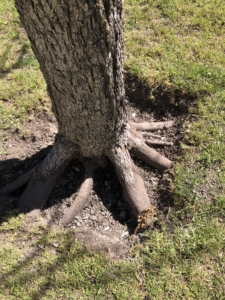
IMG_6846Deep root fertilization is just one part of a complete plant health strategy. At Happy Tree Service of Austin, we integrate fertilization with diagnostics, soil care, and monitoring to provide comprehensive support for your trees.

Diagnostic-Driven Plant Health Plans

We begin with an evaluation that may include visual inspection and soil testing. These diagnostics guide our fertilization plans, ensuring that treatments are customized to your tree’s specific needs. For broader landscape needs, we also integrate fertilization with Austin tree planting and other long-term soil health strategies. By starting with accurate information, we avoid unnecessary applications and deliver more effective care.

Pairing With Aeration or Root Zone Invigoration

Fertilization is most effective when roots have room to breathe and absorb nutrients. In compacted soils, we may recommend pairing deep root fertilization with aeration or root zone invigoration. These treatments use air spading and compost blends to break up dense soils, add organic matter, and stimulate beneficial fungi. Together, these services create an environment where fertilization produces the greatest possible impact.

Monitoring and Adjusting Over Time

Tree care is not static. Soil composition changes, stress factors shift, and trees evolve as they grow. That’s why our arborists provide ongoing monitoring and make adjustments to fertilization schedules as needed. By evaluating canopy density, growth rates, and soil health over time, we adapt care plans to meet your trees’ changing requirements.

Schedule Deep Root Fertilization With Austin’s Trusted Tree Experts

The health of your trees depends on what happens beneath the soil. Deep root fertilization strengthens root systems, improves soil vitality, and prepares your trees to resist drought, pests, and storm stress. For homeowners and property managers in Austin, this service is one of the most effective ways to preserve the beauty, safety, and value of your landscape.

At Happy Tree Service of Austin, we combine certified arborist expertise with local experience to deliver results you can trust. From soil testing to tailored nutrient blends, we use science-based methods to give your trees the strongest possible foundation. With Austin tree healthcare services led by ISA Certified Arborists, we ensure your trees remain healthy, resilient, and beautiful year after year.

Call us today at 512-599-9948 or reach out online to schedule a free estimate for deep root fertilization. With professional care timed to Central Texas conditions, your trees can thrive season after season, providing shade, beauty, and protection for years to come.


What is deep root fertilization and how does it work?

Deep root fertilization is a specialized treatment where a certified arborist uses a high-pressure probe to inject a liquid nutrient solution directly into the soil — typically 6 to 10 inches deep — throughout the tree’s critical root zone. Injections are spaced 2 to 3 feet apart in a grid pattern around the drip line (the outer edge of the canopy). This places nutrients exactly where feeder roots absorb them most efficiently, bypassing the dense turfgrass layer that intercepts surface-applied fertilizers. The pressure of each injection also loosens compacted soil, improving oxygen and water movement around the roots. The entire process for a single tree takes 15 to 30 minutes and leaves only small probe holes that close within days.

How much does deep root fertilization cost in Austin?

For most residential trees in Austin, deep root fertilization runs between $150 and $400 per tree, depending on trunk diameter, the fertilizer blend required, and site conditions. Small trees under 10 inches in diameter typically fall in the $100–$200 range, while larger specimen trees cost more due to the greater volume of product and injection points required. Most homeowners treat three to five trees in a single visit, with package pricing often bringing the total to $400–$800. Happy Tree Service of Austin provides free estimates so you receive a precise quote before any commitment — call 512-212-0010 to schedule.

When is the best time to fertilize trees in Austin, TX?

In Central Texas, the two optimal windows are late fall (October through November) and early spring (February through March). Fall is the preferred time — soil temperatures remain warm enough for root uptake while the tree directs nutrients into root development and stored reserves for spring. Early spring is the second-best window, as trees emerge from dormancy ready to absorb nutrients that fuel leaf expansion and structural growth. Avoid fertilizing during peak summer heat (June through August) — adding nutrients when trees are already water-stressed can push growth they can’t sustain, doing more harm than good.

How often should trees be deep root fertilized?

Most trees in Austin’s urban landscape benefit from annual deep root fertilization. Trees in high-stress environments — compacted soils, near construction, on commercial properties, or showing active decline — often do best with two treatments per year, in fall and spring. Hardy, well-established trees growing in healthier soils may only need treatment every other year. Our ISA Certified Arborists assess your soil test results, tree species, canopy density, and site conditions before recommending a schedule. Fertilizing too often can create nutrient imbalances, so a tailored plan is always preferable to a one-size-fits-all approach.

What is the difference between deep root fertilization and surface fertilization?

Surface fertilization — granular products spread on the lawn — delivers nutrients to the top 2 to 4 inches of soil, the layer dominated by turfgrass roots. In practice, the grass absorbs most of those nutrients before they ever reach your tree’s feeder roots. Surface fertilizers are also subject to runoff, especially in Austin’s clay soils where water doesn’t penetrate quickly. Deep root fertilization bypasses all of this by injecting a slow-release liquid blend directly into the root zone at 6 to 10 inches depth. The result is more efficient nutrient delivery, less waste, and measurably better outcomes for tree health.

How long does it take to see results from deep root fertilization?

Most homeowners notice visible improvements within one growing season — typically greener, fuller foliage and more vigorous new growth within a few months of treatment. Trees treated in fall show the most dramatic response the following spring, when stored nutrients fuel the first flush of leaf and shoot growth. Structural benefits — deeper root systems, improved drought tolerance, and greater pest resistance — take longer to develop but compound year over year with consistent annual treatment.

Why do Austin trees need deep root fertilization more than trees in other areas?

Austin’s limestone-derived soils have a pH of 7.5 to 8.5. At that alkalinity, iron, manganese, and zinc become chemically unavailable to roots even when physically present in the soil — a condition called nutrient lock-out. This is why interveinal chlorosis (yellowing leaves with green veins) is so common on Austin live oaks; it’s not a disease, it’s a chemistry problem. Add heavy clay soil that compacts easily, inconsistent rainfall, and competition from turfgrass, and urban trees rarely receive the nutrition they need from the soil alone. Deep root fertilization with a pH-appropriate blend addresses all of these local factors directly.

Does deep root fertilization help trees survive Austin’s summer droughts?

Yes — improved drought tolerance is one of the most practical benefits for Central Texas homeowners. Deep root fertilization, particularly blends that include bio stimulants and mycorrhizal fungi, stimulates the growth of fine fibrous roots — the roots responsible for absorbing water. A tree with a denser, deeper fibrous root network can access soil moisture from a larger area during extended dry periods. Well-nourished trees also maintain stronger cellular structure and regulate water loss more effectively. Think of it as conditioning your trees to be more resilient before summer stress arrives, rather than trying to rescue a tree already in decline.

Can I fertilize a tree that has oak wilt?

No — fertilizing a tree actively infected with oak wilt can accelerate the disease rather than help the tree fight it. Oak wilt is a fungal infection that disrupts the tree’s water-conducting vessels, and stimulating growth places additional demand on a vascular system that is already compromised. If you suspect oak wilt, contact a certified arborist for a proper diagnosis before any treatment. Happy Tree Service of Austin holds Texas Oak Wilt Certification (#TOWQ-436) and offers dedicated oak wilt treatment services. Once a tree has been treated and stabilized, a fertilization plan can be developed as part of long-term recovery.

Do I need a soil test before getting deep root fertilization?

A soil test is not strictly required, but it significantly improves the effectiveness of treatment. Austin’s soils vary widely — one property may have extreme compaction, another high alkalinity, another a specific iron deficiency. Without testing, fertilization relies on general assumptions rather than your tree’s actual needs. At Happy Tree Service of Austin, our ISA Certified Arborists conduct soil testing as part of the pre-treatment evaluation to determine pH and identify specific nutrient deficiencies. This lets us customize a fertilizer blend that corrects what’s actually missing — preventing over-application and ensuring your investment produces the best possible outcome.

Happy Tree Service™ Maintains Certified Arborists on Staff

Evan Peter, Certified Arborist – TX-4602A

ICA-400

Call for Immediate Service Send an Email Message
PreviousNext
1234567891011

Call for Immediate Service Send an Email Message

Contact Info

Happy Tree Service of Austin

1108 Lavaca St Suite 110-445, Austin, TX 78701


Call Now: 512-212-0010

Sitemap

Office Location

4.9
(based on 272 Reviews)

Service Areas

  • Austin
  • Bastrop
  • Bee Cave
  • Barton Creek
  • Cedar Creek
  • Cedar Park
  • Dripping Springs
  • Georgetown
  • Lakeway
  • Leander
  • Pflugerville
  • Rollingwood
  • Round Rock
  • Tarrytown
  • Westlake Hills

Our Key Services

  • Austin Tree Service [Home]
  • Austin Tree Planting Services
  • Tree Trimming & Pruning
  • Tree Removal Services
  • Emergency Tree Service
  • Commercial Tree Services
  • ISA Certified Arborists
  • Deep Root Fertilization Services
  • Oak Wilt Treatment Services
  • Looking for an Arborist Job? Check out Careers
  • Tree Services Near Me – Service Areas
  • Bastrop Tree Services | Residential & Commercial tree care by Certified Arborists
Call Us: 512-212-0010 | Copyright 2023 by Happy Tree Service, an Austin Tree Service Company | Privacy Policy
Scroll to top