Why Austin’s Soil Conditions Require Specialized Treatment
 The soils in Austin and the surrounding Hill Country present unique challenges for tree growth. High clay content, poor drainage, and elevated pH levels limit nutrient availability and restrict root development. These factors make standard surface applications ineffective and highlight the need for professional, deep-rooted care.
Clay Soils and Poor Drainage
Much of Central Texas is covered in heavy clay soil that holds water near the surface while suffocating roots below. This creates conditions where trees are both water-stressed and oxygen-deprived. Deep root fertilization delivers nutrients past the dense surface layer, helping roots access resources they cannot otherwise reach.
High pH and Nutrient Lock-Out
Alkaline soils common in this region often prevent trees from absorbing critical nutrients like iron, manganese, and phosphorus. Even if these nutrients are present, high pH levels can render them unavailable to roots. By testing soil and applying targeted blends, we correct deficiencies and bypass the natural lock-out effect.
Foot Traffic and Construction Compaction
Commercial and residential properties alike deal with compacted soils caused by driveways, patios, and daily foot traffic. Compaction reduces pore space in the soil, limiting oxygen and water availability. Our deep root injections not only deliver nutrients but also relieve compaction, improving overall soil health and making conditions more favorable for long-term growth.
When and How Often to Fertilize Your Trees
One of the most common questions property owners ask is when to schedule deep root fertilization and how often it should be repeated. The truth is that timing and frequency matter as much as the treatment itself. Fertilizing too often can create imbalances, while fertilizing too infrequently may leave trees undernourished during critical growth periods. Our ISA Certified Arborists design fertilization schedules that reflect the needs of your trees, the conditions of your soil, and the challenges of the Central Texas climate.
Best Season for Application
In Austin, the best times for deep root fertilization are late fall and early spring. In fall, cooler weather and warm soil create an ideal environment for root uptake. Nutrients applied at this time strengthen trees before winter dormancy and prepare them for vigorous spring growth. Early spring is another excellent window, as trees are waking up from dormancy and ready to absorb nutrients that support leaf expansion, flowering, and structural growth.
Summer and winter fertilization are less effective because extreme heat or cold slows root activity. By focusing treatments on late fall and early spring, we maximize nutrient uptake and reduce stress on your trees. This timing aligns naturally with our seasonal tree care services Austin, which are designed to give your landscape consistent support throughout the year.
Annual or Biennial Application Plans
The right frequency for fertilization depends on species, soil conditions, and property usage. Many trees in Austin benefit from annual treatments, particularly those in high-stress environments such as compacted urban soils or commercial landscapes. Our Austin commercial tree services include fertilization, planting, and soil care designed for long-term property health. In other cases, biennial applications may be sufficient for hardy, well-established trees growing in healthier soils.
Our arborists assess soil test results, tree age, canopy density, and stress factors before recommending a plan. By creating tailored schedules, we ensure that fertilization supports your trees without unnecessary repetition.
How Long to Expect Results
Deep root fertilization is not an instant fix. Within a few months, you may notice greener foliage, fuller canopies, and more vigorous new growth. These visible improvements reflect the tree’s improved energy production. Long-term benefits, such as stronger root systems and better drought resistance, take more time to develop. With annual or biennial treatments, these results build year after year, creating healthier trees with greater resilience to Central Texas conditions.
How Deep Root Fertilization Supports Tree Health Over Time
Fertilization is about more than a short-term boost. Done correctly, it supports every aspect of tree health and prepares trees to withstand environmental pressures for decades.
Stronger Roots and Better Anchoring
One of the most valuable long-term benefits of fertilization is stronger root development. Nutrient-rich soils encourage roots to grow deeper and wider, providing better anchoring. In storm-prone areas like Austin, trees with deeper roots are less likely to topple during high winds or heavy rains. This stability protects both the tree and nearby structures.
Improved Nutrient Cycling and Soil Life
Healthy soils are full of microorganisms and fungi that work in partnership with roots. Fertilization replenishes nutrients that fuel this underground ecosystem, promoting improved nutrient cycling and long-term soil vitality. By building healthier soil, fertilization benefits not just individual trees but the entire landscape.
Increased Resistance to Disease and Insects
Healthy trees are naturally better at defending themselves. With stronger root systems and balanced nutrition, trees can produce chemical defenses that deter pests like borers and resist fungal infections such as leaf spot. Instead of relying solely on reactive treatments, fertilization strengthens your trees so they are less likely to need intervention in the first place.
How Fertilization Fits Into Our Plant Health Care Services
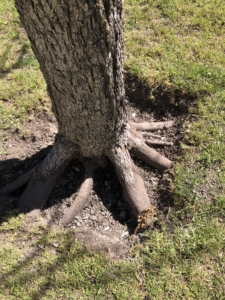 Deep root fertilization is just one part of a complete plant health strategy. At Happy Tree Service of Austin, we integrate fertilization with diagnostics, soil care, and monitoring to provide comprehensive support for your trees.
Diagnostic-Driven Plant Health Plans
We begin with an evaluation that may include visual inspection and soil testing. These diagnostics guide our fertilization plans, ensuring that treatments are customized to your tree’s specific needs. For broader landscape needs, we also integrate fertilization with Austin tree planting and other long-term soil health strategies. By starting with accurate information, we avoid unnecessary applications and deliver more effective care.
Pairing With Aeration or Root Zone Invigoration
Fertilization is most effective when roots have room to breathe and absorb nutrients. In compacted soils, we may recommend pairing deep root fertilization with aeration or root zone invigoration. These treatments use air spading and compost blends to break up dense soils, add organic matter, and stimulate beneficial fungi. Together, these services create an environment where fertilization produces the greatest possible impact.
Monitoring and Adjusting Over Time
Tree care is not static. Soil composition changes, stress factors shift, and trees evolve as they grow. That’s why our arborists provide ongoing monitoring and make adjustments to fertilization schedules as needed. By evaluating canopy density, growth rates, and soil health over time, we adapt care plans to meet your trees’ changing requirements.
Schedule Deep Root Fertilization With Austin’s Trusted Tree Experts
The health of your trees depends on what happens beneath the soil. Deep root fertilization strengthens root systems, improves soil vitality, and prepares your trees to resist drought, pests, and storm stress. For homeowners and property managers in Austin, this service is one of the most effective ways to preserve the beauty, safety, and value of your landscape.
At Happy Tree Service of Austin, we combine certified arborist expertise with local experience to deliver results you can trust. From soil testing to tailored nutrient blends, we use science-based methods to give your trees the strongest possible foundation. With Austin tree healthcare services led by ISA Certified Arborists, we ensure your trees remain healthy, resilient, and beautiful year after year.
Call us today at 512-599-9948 or reach out online to schedule a free estimate for deep root fertilization. With professional care timed to Central Texas conditions, your trees can thrive season after season, providing shade, beauty, and protection for years to come.