Arborist vs. Tree Trimmer: What’s the Difference and Which One Do You Need?
A certified arborist is an ISA-credentialed professional trained in tree biology, disease diagnosis, and structural risk assessment. A tree trimmer is a hands-on technician who specializes in cutting, shaping, and maintaining trees. Both can work on the same crew, but the difference between an arborist and a tree trimmer comes down to training and authority. Only a certified arborist can evaluate tree health, identify disease, or guide decisions involving removal, preservation, or risk. For Austin homeowners dealing with oak wilt pressure and Heritage Tree ordinances, that distinction matters before any work begins.
What Is a Certified Arborist? (And Why the Certification Matters)
A certified arborist is not simply someone who works on trees. It is a professional credential governed by the International Society of Arboriculture (ISA), the industry’s leading credentialing body. So what does an arborist do that a trimmer cannot? An ISA certified arborist in Austin, TX has earned the authority to make decisions that go far beyond cutting and trimming.
That authority includes diagnosing tree diseases like oak wilt, conducting formal tree risk assessments, and developing protection plans for trees near construction sites. A certified arborist can determine whether a tree should be removed or can be preserved and treated.
That is a judgment call that requires training in tree biology, root systems, and species-specific care. A tree trimmer without ISA certification does not have the background to make those calls.
Certified arborists also follow ANSI A300 standards, the most widely accepted benchmark for professional tree work in the United States. These standards define proper pruning techniques, including structural pruning, crown thinning, crown raising, crown reduction, and deadwooding. The Tree Care Industry Association (TCIA) recognizes ANSI A300 compliance as a baseline for reputable tree care operations.
The ISA maintains a free public directory where homeowners can verify any arborist’s credentials before hiring. That transparency is a trust signal worth checking, and one that uncertified crews simply cannot offer.
What Qualifications Does an ISA Certified Arborist Need?
Earning ISA certification requires passing a rigorous credentialing exam that covers tree biology, soil science, disease identification, pruning practices, and risk assessment. Candidates must also hold a minimum of three years of full-time, hands-on tree care experience before they are eligible to sit for the exam.
Once certified, arborists are required to earn continuing education credits to keep their credential active. It is a higher bar than most homeowners realize, and it is what separates a qualified tree care professional from someone who simply owns a chainsaw.
How Do I Verify an Arborist Is Truly Certified in Texas?
The ISA public directory at isa-arbor.com allows anyone to search by name, company, or ZIP code to confirm whether an arborist’s certification is current and active. It takes less than a minute.
For example, Happy Tree Service of Austin’s Evan Peter holds credential TX-4602A, and anyone can verify that directly through the directory. If a tree service cannot point you to a verifiable ISA credential, that tells you something worth knowing before you hand over access to your property.
Why Choose Happy Tree Service as Your Certified Arborist in Austin?
Happy Tree Service of Austin has spent more than 20 years caring for trees across Central Texas. That experience means deep familiarity with the challenges unique to this region: alkaline clay soils that stress root systems, seasonal drought cycles, storm volatility, and one of the highest concentrations of oak wilt in the state. Every property evaluation draws on that local knowledge.
The results show in the reviews. Happy Tree Service holds a 4.9-star Google rating backed by more than 300 verified five-star reviews from homeowners across the Austin metro area. That volume of consistent feedback reflects a relationship-first approach to tree care, not a one-job-and-done operation.
Happy Tree Service also carries full General Liability and Workers’ Compensation insurance on every job. This protects you directly.
If an uninsured crew member is injured on your property, or if their equipment damages a neighboring structure, you as the homeowner can be held financially responsible. Hiring a licensed, insured tree service in Austin eliminates that exposure.
When a tree health concern requires lab confirmation, Happy Tree Service partners with the Texas A&M Plant Pathology Lab for disease validation. This is a science-backed diagnostic process, not guesswork. It is the kind of partnership that separates certified arborist care from a crew that shows up with a truck and a bid.
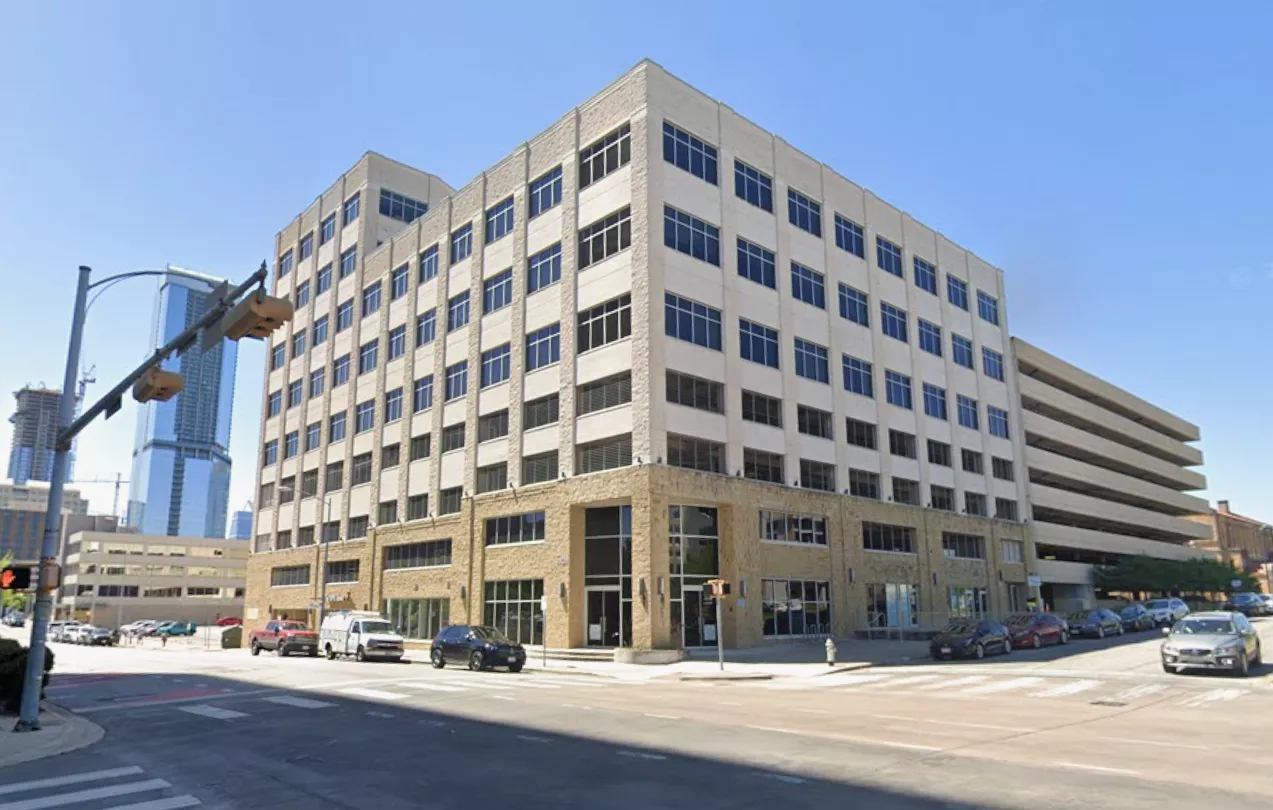
Happy Tree Service is based at 1108 Lavaca St, Suite 110-445, Austin, TX 78701 and serves Austin, Round Rock, Cedar Park, Georgetown, Leander, Pflugerville, Lakeway, Westlake Hills, Bee Cave, Dripping Springs, Barton Creek, Tarrytown, and Rollingwood across Travis County and Williamson County.
Ready to have your trees evaluated by a certified arborist? Call 512-212-0010 for a free estimate or request one online.
What Certifications Does Happy Tree Service Hold in Austin, TX?
Happy Tree Service of Austin holds the following active credentials:
- ISA Certified Arborist: Evan Peter, TX-4602A (verifiable at isa-arbor.com)
- TRAQ Certified: Tree Risk Assessment Qualified, trained in formal structural risk evaluation methodology
- Texas Oak Wilt Qualified: Credential #TOWQ-436, authorized for oak wilt diagnosis, treatment, and prevention in Texas
- Pesticide Applicator License: License #0967351, required for professional-grade plant health care treatments including deep root fertilization
- ISA Member and Texas ISA Chapter Member: Active participation in the industry’s leading professional organizations
What Is a Tree Trimmer and What Do They Actually Do?
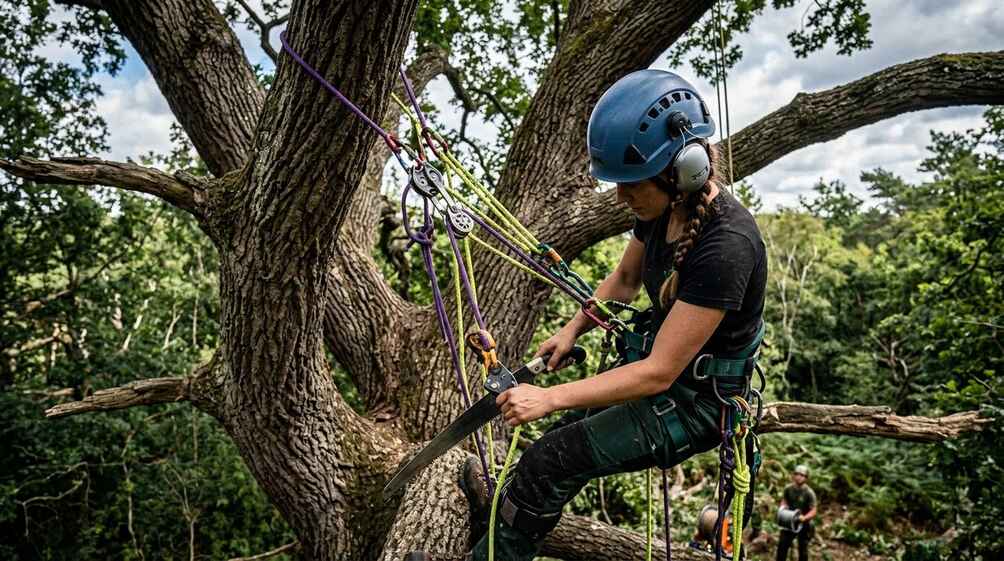
A tree trimmer is a hands-on technician focused on the physical work of tree maintenance. That includes cutting and shaping branches, clearing deadwood, and operating equipment like chainsaws, wood chippers, and aerial lifts. These are skilled tasks, and a good trimmer is essential to any professional tree care operation.
The real arborist vs tree service distinction matters here. In a well-structured company like Happy Tree Service of Austin, trimmers work under the direction of a certified arborist. The arborist evaluates the tree, designs the care plan, and determines which cuts are appropriate.
The trimmer executes that plan. When tree trimming and pruning services in Austin are performed within this structure, the result is work that follows ANSI A300 standards and protects the long-term health of the tree.
Problems tend to show up when trimmers work without that oversight. One of the most common mistakes is tree topping, which involves cutting large limbs back to stubs. Topping destroys a tree’s natural form and triggers a flush of weak, fast-growing shoots called watersprouts.
These epicormic growths are structurally fragile and far more likely to fail in a storm than the original branches. A related harmful practice is lion-tailing, where all interior branches are stripped away and only foliage clusters at the branch tips remain. Both practices leave trees more vulnerable than before the crew arrived.
The clearest way to see how the arborist and trimmer roles differ is side by side.
Is a Tree Trimmer the Same as an Arborist?
No. A tree trimmer and a certified arborist fill different roles on a tree care team. The trimmer handles the physical cutting, shaping, and cleanup.
The arborist provides the diagnosis, planning, and decision-making that determines what work should be done and how. A trimmer can maintain a tree’s appearance, but only a certified arborist can evaluate its health, identify disease, or determine whether a structural concern requires intervention.
What Happens When a Tree Trimmer Works Without an Arborist Overseeing the Job?
Without arborist direction, a trimmer is making decisions based on appearance rather than tree health. That can lead to improper cuts like topping or lion-tailing, both of which cause long-term structural damage. Disease signs like oak wilt or canopy decline can go unnoticed entirely because the trimmer was never trained to look for them.
There is also a regulatory risk in Austin: pruning or removing a Heritage Tree without a permit can result in fines, and a trimmer without arborist training may not know the ordinance exists. If that crew is also uninsured, the homeowner absorbs all of the financial liability if something goes wrong on the job.
Arborist vs. Tree Trimmer: A Side-by-Side Comparison for Austin Property Owners
The table below breaks down the core differences between an ISA Certified Arborist and a non-certified tree trimmer. For Austin homeowners weighing which professional to call, these distinctions directly affect the quality of care your trees receive and the level of risk you take on as a property owner.
| Category | ISA Certified Arborist | Tree Trimmer (Non-Certified) |
| Training & Certification | ISA exam + 3 years of experience + mandatory continuing education | On-the-job training; no formal exam required |
| Tree Biology Knowledge | Deep: species identification, disease, root systems, soil science | Limited to cutting and shaping techniques |
| Disease Diagnosis | Yes. Can identify oak wilt, pest infestation, decay, and other conditions | No formal diagnostic training |
| Risk Assessment | TRAQ-qualified for formal structural risk evaluation | Cannot conduct formal risk assessments |
| ANSI A300 Standards | Required to follow published pruning best practices | May not be aware of or follow these standards |
| Insurance & Liability | Reputable firms carry General Liability and Workers’ Compensation | Often uninsured or underinsured |
| Best For | Health concerns, disease, high-risk trees near structures, long-term planning | Routine aesthetic trimming under arborist direction |
If your situation involves tree health concerns, disease symptoms, or risk to a structure, the arborist vs tree trimmer comparison points clearly toward certified care. That is where your tree healthcare services in Austin provider should be operating.
When Should Austin Homeowners Call a Certified Arborist (Not Just a Trimmer)?
Some tree situations require more than a crew with cutting equipment. Knowing when to hire an arborist can save you money, protect your property, and prevent irreversible damage to a tree. The following scenarios call for a certified arborist’s training, diagnostic ability, and professional judgment before any physical work begins:
- A tree is visibly declining and the cause is unclear. Yellowing leaves, early leaf drop, a thinning canopy, or unusual growth patterns all signal something deeper than a cosmetic issue.
- You suspect oak wilt, one of the most serious and fast-spreading tree diseases in Central Texas. Fresh pruning wounds on oaks made during the February through June seasonal pruning window can attract sap beetles that carry the fungal pathogen responsible for the disease. A certified arborist understands this seasonal risk, which the Texas A&M AgriLife Extension documents extensively, and will advise against unnecessary oak pruning during that period.
- Storm damage has left a leaning, cracked, or overhanging limb near a structure, driveway, fence, or power line. Happy Tree Service offers emergency tree service in Austin and can respond to storm damage situations in a timely manner, with certified arborists on staff to perform a storm damage assessment before removal begins.
- You are planning construction near existing trees and need a tree protection plan for compliance or liability purposes.
- A removal decision requires professional judgment, not just a quote from someone with a chainsaw.
- You need a documented tree health evaluation or report for an HOA, property sale, insurance claim, or permit application.
- A tree near a building or occupied area poses ambiguous risk that requires a formal tree risk assessment.
- You are unsure whether a tree should be removed or can be preserved through oak wilt treatment and services in Austin or other plant health care options.
Austin’s Heritage Tree ordinance adds another layer. The City of Austin protects trees that meet certain trunk diameter thresholds, and pruning or removing a Heritage Tree without a permit can result in fines and legal liability. Before any significant tree work begins, hire a certified arborist in Austin who can evaluate whether your tree qualifies, advise on permitting requirements, and ensure all work is performed in compliance with local regulations.
Central Texas conditions make certified oversight especially important. Alkaline clay soils stress root systems and contribute to soil compaction. Oak wilt pressure is among the highest in the state.
Drought stress weakens trees that may already be vulnerable. Storm volatility can turn a compromised branch into a property damage event overnight. Native species like live oak, cedar elm, and pecan each have specific care needs that a certified arborist is trained to address.
Can a Tree Trimmer Spot Oak Wilt in Austin?
Not reliably. Oak wilt symptoms can resemble drought stress, nutrient deficiency, or other fungal conditions, and an accurate diagnosis requires training in tree pathology that most trimmers do not have.
An oak wilt certified arborist knows what to look for, including veinal necrosis on leaves and the presence of fungal mats beneath the bark. When confirmation is needed, Happy Tree Service sends samples to the Texas A&M Plant Pathology Lab for definitive testing rather than relying on visual assessment alone.
What Are the Signs Your Tree Needs a Certified Arborist, Not Just a Trim?
If your tree shows any of the following, a certified arborist should evaluate it before any cutting begins:
- Canopy thinning or leaf drop that is not tied to the normal seasonal cycle
- Yellowing or browning leaves with vein discoloration, which can indicate oak wilt or other vascular disease
- Fungal growth on the trunk, root flare, or major limbs
- Visible leaning or shifting at the base after a storm
- Exposed or damaged roots, especially near the root collar
- Soil that appears compacted, cracked, or pulling away from the trunk
- Limbs that have cracked but not yet fallen
These are health and structural signals, not cosmetic issues. A trim will not address them, and in some cases it can make the problem worse.
Get a Free Certified Arborist Consultation from Happy Tree Service: Serving All of Austin
Happy Tree Service of Austin staffs ISA Certified Arborists, not just trimming crews. That means every property evaluation starts with professional-grade diagnosis, science-backed recommendations, and a care plan built around your trees’ actual health and structural condition.
Evan Peter (ISA Certified Arborist TX-4602A, TRAQ Certified, Texas Oak Wilt Qualified) leads a team with more than 20 years of Central Texas experience and over 300 five-star reviews from homeowners across the Austin metro area and surrounding communities. Every job is fully insured with General Liability and Workers’ Compensation coverage.
Whether you have a tree that needs a health evaluation, a storm-damaged limb near your home, or you simply want to know what your trees need to stay strong, Happy Tree Service is ready to help. Call 512-212-0010 for a free arborist consultation and estimate, or submit your request online. Our ISA Certified Arborists serve the Austin metro area and are ready to evaluate your property.