 Tree Trimming and Pruning That Supports Structure and Health
Pruning is a vital part of long-term tree care, but only when it’s done correctly. In Cedar Park, trees often grow close to buildings, power lines, and walkways—and those conditions call for precision and biological awareness. Our tree trimming services reduce risk, improve balance, and support long-term canopy development.
Crown Thinning for Light, Airflow, and Balance
Dense tree canopies may look full, but they can block airflow, trap moisture, and create conditions for disease. We thin interior limbs selectively to open space within the crown, which improves both health and structure. This is especially useful in oaks and elms that grow thick, overlapping branches.
Clearance Pruning for Walkways, Homes, and Driveways
Low-hanging limbs can obstruct sidewalks, rub against roofs, or fall during storms. We create safe clearance zones around your home and access areas, trimming with clean, proper cuts that encourage healthy regrowth and maintain a tree’s natural form.
Corrective Pruning for Young or Previously Mistreated Trees
Newly planted trees often grow unevenly without early guidance. We offer structural pruning for saplings and young trees to train strong branch angles, central leaders, and balanced canopies. If your trees have been previously overpruned or topped, we also perform corrective work to restore safe structure over time.
Tree Removal and Storm Response With Safety at the Center
Tree removal isn’t always about what’s failing today—it’s also about managing long-term risk. In Cedar Park, high winds, compact root zones, and hidden disease can all lead to failure. Our team performs tree removal services with planning, control, and safety as the top priorities.
When Removal Is the Best Long-Term Option
If a tree has extensive trunk decay, root instability, or disease that can’t be treated, we may recommend removal. We assess trees thoroughly before making this call and explain all findings clearly. When removal is necessary, we also help you plan for what comes next—whether that’s replanting or hardscaping.
Controlled Rigging and Lowering in Tight Suburban Lots
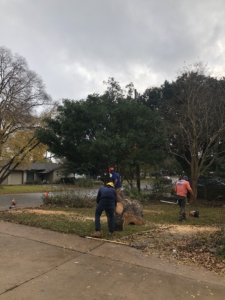
Cedar Park homes often have limited access around trees. We use sectional dismantling and rigging systems to lower branches and trunk pieces safely, avoiding damage to fencing, patios, garden beds, and nearby trees. This method is quiet, controlled, and ideal for small yards.
Storm-Damaged Tree Removal With Emergency Dispatch
Spring and summer storms can break limbs, split trunks, or push over weakened trees. We offer emergency tree service across Cedar Park for sudden hazards that threaten safety or access. Our team responds quickly and works carefully to stabilize the area before moving into cleanup.
Landscape and Structure Protection Throughout the Process
We use mats to protect turf, coordinate with irrigation plans, and stage equipment to minimize disruption. Whether the job is large or small, we take care not to disturb stonework, lighting, or nearby plantings. After the tree is gone, we clean the site thoroughly and check for surrounding damage.
Full Debris Haul-Away and Final Site Inspection
Once the removal is complete, we handle all hauling and grinding unless you request otherwise. We leave the site clean and perform a final inspection to ensure the surrounding trees and structures were not affected during the process.
Stump Grinding That Clears Space and Prevents Problems
A leftover stump does more than interrupt your lawn—it can harbor pests, regrow suckers, or block future landscape improvements. We offer stump grinding services across Cedar Park to finish the job and restore your space.
Surface and Deep-Level Grinding Options
Whether you’re planning to lay sod, install mulch, or replant in the same spot, we tailor the depth of grinding to your needs. We remove the visible stump and grind below grade to break up the root flare and create a clean, level base for your next step.
Discouraging Insect Colonization and Fungal Growth
Leftover stumps attract carpenter ants, termites, and fungal spores—especially in humid months. Grinding eliminates the food source and limits the spread of decay to other trees nearby. This is particularly important for properties with mature oaks or shared tree beds.
Prepping the Ground for Sod, Beds, or Tree Replacement
After grinding, we rake and level the mulch. You can reuse it for beds or request removal. If you plan to replant, we’ll advise on spacing, soil conditioning, and timing to give your next tree the best chance at success.
Tree Planting That Fits the Cedar Park Landscape
In Cedar Park, planting a tree is more than a landscape upgrade—it’s an investment in long-term shade, structure, and curb appeal. With narrow lots, dense building, and varied sun exposure across developments, choosing the right tree and planting it the right way matters more than ever. That’s why many residents and HOAs trust us as their local Tree planting company for professional installation and follow-up care.
Tree Selection Based on Shade, Soil, and Scale
We guide clients toward trees that perform well in Cedar Park’s compact soil and mixed light conditions. For small front yards or street medians, we recommend species with controlled root growth and moderate canopies. In larger side yards or greenbelts, we may suggest native options like live oak, cedar elm, or Mexican sycamore—each selected to match sun exposure, drainage, and space constraints.
Proper Depth, Mulching, and Root Flare Exposure
A common issue in urban planting is burying the root flare too deep, which leads to poor oxygen flow and rot at the base. We plant every tree with the flare above grade, apply mulch in a proper ring (not piled against the trunk), and ensure the hole is sized for root expansion. These details prevent early decline and promote strong establishment.
Watering Guidance and Structural Support During Establishment
Once a tree is installed, it needs the right care to thrive. We provide watering plans based on soil type and season, install mulch to regulate temperature, and advise on staking if needed. After one growing season, we return to assess early growth and recommend corrective pruning if necessary.
HOA and Street Tree Compliance Planning
For homeowners in managed communities or builders working under city guidelines, we help navigate species restrictions, sidewalk spacing requirements, and canopy clearance rules. We make sure your new tree doesn’t just look good—it meets every standard required.
 Fertilization and Air-Spading for Compact Urban Soil
Trees growing in construction backfill or high-traffic areas often suffer from poor soil conditions. Roots may be trapped under dense layers that limit water absorption, oxygen flow, and nutrient uptake. Our arborists use targeted treatments to restore health from the ground up.
Soil and Root Zone Testing to Target Treatment
We start with testing. Soil samples help us determine pH, organic content, and mineral balance, while root zone evaluations show us how compacted or restricted the area has become. These insights shape a custom treatment plan specific to your tree’s needs.
Deep Root Feeding for Trees Showing Yellowing or Thinning
We use specialized tools to inject slow-release nutrients into the soil, directly into the zone where roots can absorb them best. This is especially effective for trees planted near sidewalks, in parking islands, or under turf irrigation—conditions that often cause chlorosis or stunted growth.
Air-Spading to Improve Oxygen Flow Without Root Damage
When compacted soil becomes the issue, we use air-spading to safely break it up. This tool uses compressed air to excavate around roots, loosening soil while leaving roots intact. It’s a non-invasive way to restore oxygen flow and improve long-term health.
Ideal for Trees in Lawns, Parking Strips, or Near Hardscapes
These services are ideal for trees surrounded by concrete, grass, or irrigation systems. Whether your tree is struggling near a curb, in a planter bed, or under heavy foot traffic, we can use soil restoration and feeding to bring it back to full health.
Follow-Up Monitoring for Continued Health Gains
Tree recovery doesn’t stop with one treatment. We offer ongoing monitoring to track nutrient uptake, canopy density, and root collar development. This allows us to adjust fertilization or watering as needed and ensure your trees continue to improve season after season.
Oak Wilt Protection for Cedar Park’s Live Oak Canopy
Cedar Park’s oak trees are central to the area’s identity—and oak wilt remains one of the most destructive threats to that canopy. Without proper prevention and early containment, this fungal disease can spread quickly through neighborhoods, devastating live oaks and red oaks alike.
How Oak Wilt Spreads and What Early Signs Look Like
Oak wilt spreads in two ways: through beetles that carry fungal spores from open pruning wounds and through interconnected root systems between nearby trees. Early signs include thinning canopies, veinal browning, and sudden leaf drop—often mistaken for drought stress. Our arborists are trained to spot the difference.
Enforcing the July–January Pruning Window
To reduce the risk of infection, all oak pruning in Cedar Park is scheduled between July and January. This avoids the peak beetle activity period when fresh cuts can become entry points for disease. If storm damage requires emergency cuts outside this window, we seal wounds immediately and sanitize tools between trees.
Sanitation and Disposal to Limit Transmission
In confirmed oak wilt cases, we manage infected material carefully. Logs and limbs are removed promptly, cut surfaces are sealed, and infected red oaks are handled according to containment guidelines. These steps are critical to stopping further spread across the neighborhood.
Certified Treatment Plans With Long-Term Monitoring
Our oak wilt treatment plans are backed by ISA and Texas Oak Wilt qualifications. We use systemic fungicide injections, trenching, and canopy preservation techniques when appropriate. Follow-up evaluations help us monitor for re-infection and check the health of neighboring trees.
HOA Support and Community-Wide Containment Efforts
In neighborhoods with shared greenbelts or dense oak populations, we work with HOA boards and property managers to develop large-scale prevention plans. This may include trimming schedules, community education, and mapping infected zones to stay ahead of the spread.
Schedule Your Cedar Park Tree Consultation Today
From pruning to planting, oak wilt treatment to soil recovery, Happy Tree Service of Austin brings certified expertise to every tree we touch. We’ve spent more than 30 years working in Central Texas—learning the soil, studying the trees, and earning the trust of homeowners, HOAs, and property managers in Cedar Park.
If you’re dealing with tree decline, storm damage, or simply want to take better care of your landscape, our team is ready to help. Call today to schedule a free consultation with one of our ISA Certified Arborists and discover how science-backed tree care can protect your home, your trees, and your peace of mind.